Raspberry Pi Zero 2 W (2021) — Board Sheet
⚡ The essentials in 60 seconds
- soc — Raspberry Pi RP3A0 — the company's first System-in-Package (SiP): the Broadcom BCM2710A1 die (same silicon as the BCM2837A1 in the launch Raspberry Pi 3) plus a 4 Gbit (512 MB) Micron LPDDR2 die and decoupling capacitors in one package (packaged by ASE; "AU" marking = gold bond wires). (RP3A0 official doc page; launch post "Packaging magic")
- cpu — quad-core Arm Cortex-A53, 64-bit (ARMv8-A), @ 1 GHz ("Arm cores slightly down-clocked to 1GHz" vs Pi 3); official doc: with a heatsink it "can be potentially overclocked to 1.2 GHz". Performance ≈ 5× the original Zero in multi-threaded sysbench. (RP3A0 doc; launch post)
- gpu_media — H.264 + MPEG-4 decode (1080p30), H.264 encode (1080p30), OpenGL ES 1.1/2.0 (VideoCore IV-generation media stack of the BCM2837 family). (launch post spec list)
- ram — 512 MB LPDDR2 SDRAM, in-package, shared CPU/GPU. (RP3A0 doc)
- storage — microSD slot only; no onboard storage, no eMMC/EEPROM. (launch post)
- video_out — mini-HDMI port; composite video + reset available on unpopulated solder pads. (launch post spec list)
- On this board : 9 tutorials · 10 code
Launched on October 28, 2021, the Raspberry Pi Zero 2 W represents a significant evolutionary leap for the ultra-compact single-board computer family, offering a compelling blend of legacy compatibility and modern performance at an accessible price point of fifteen US dollars. Developed by Raspberry Pi Ltd. and manufactured at the Sony UK Technology Centre in Pencoed, South Wales, this board is designed to fit seamlessly into existing projects while delivering substantially more computing power than its predecessors. The core innovation lies in the RP3A0, the company’s first in-house System-in-Package (SiP) processor. A System-in-Package is a manufacturing technique where multiple integrated circuits are combined into a single package to save space and improve efficiency. In this case, the RP3A0 integrates the Broadcom BCM2710A1 die, which is the same silicon found in the Raspberry Pi 3, alongside 512 MB of Micron LPDDR2 memory and necessary decoupling capacitors. This packaging magic allows the manufacturer to fit a quad-core Arm Cortex-A53 processor, capable of 64-bit operations, into the tiny 65 mm by 30 mm form factor that defined the original Zero. The CPU runs at 1 GHz, a slight downclock from the Pi 3 to manage heat, but it still delivers approximately five times the multi-threaded performance of the original Zero. This makes the Zero 2 W the first 64-bit capable board in the Zero line, enabling the use of modern 64-bit operating systems such as OpenWrt for networking tasks or various Linux distributions for general computing.
Despite its small size, the Zero 2 W retains the familiar interface layout that users of the original Zero expect. It features a mini-HDMI port for video output, a microSD card slot for storage and operating system installation, and a CSI-2 camera connector for attaching camera modules. The board includes two micro-USB ports; however, it is crucial to understand their distinct functions. One port is dedicated solely to power input, while the second serves as the data interface, supporting USB On-The-Go (OTG). This OTG capability allows the board to act as a USB device, a feature famously used for "headless" setup where the board is plugged directly into a computer to appear as a network drive or serial adapter, simplifying initial configuration without needing a monitor or keyboard. For general input and output, the board provides a 40-pin GPIO header footprint. GPIO stands for General Purpose Input/Output, which are pins that can be programmed to send or receive signals, allowing the board to control LEDs, read sensors, or communicate with other electronic components using protocols like I2C, SPI, and UART. The standard version ships with an unpopulated header, meaning users must solder their own pins, while a variant with pre-soldered headers is also available. The electrical characteristics of these pins are identical to the rest of the Raspberry Pi family, operating at 3.3 V logic levels, though it is important to note that there is no onboard analog-to-digital converter (ADC), so external components are needed for analog sensor readings.
Wireless connectivity is handled by an onboard 2.4 GHz single-band Wi-Fi module supporting the 802.11b/g/n standard, along with Bluetooth 4.2 and Bluetooth Low Energy (BLE). The antenna is sealed under a metal shield can, which simplifies regulatory compliance and product integration, as the module has received FCC certification. However, this design choice means there is no connector for an external antenna, and the single-band limitation restricts maximum theoretical throughput to 35 Mb/s, which may be a bottleneck in congested wireless environments. The board does not support the newer WPA3 security protocol, a limitation tied to the Cypress/Infineon 43430-class Wi-Fi chip, which can be a consideration for users with modern routers configured exclusively for WPA3. Powering the board requires a 5 V supply via the micro-USB port, with a recommended 2 A power supply to ensure stability, especially when driving peripherals. The typical active current draw is around 350 mA, which is higher than the original Zero W, reflecting the increased processing power.
Thermal management is a critical aspect of the Zero 2 W’s design. Because the board is fanless and extremely compact, it relies on thick internal copper layers within the printed circuit board to spread heat. The processor has a hard thermal limit of 85 degrees Celsius, at which point it will throttle performance to prevent damage. Under sustained heavy loads, such as compiling code or running intensive benchmarks, the board can get quite warm. While it can run indefinitely without throttling in a 20-degree Celsius ambient environment during standard tasks, users planning for high-performance applications might consider adding a small heatsink. It is also worth noting that, like other models in the Zero range, the Zero 2 W lacks undervoltage detection circuitry. This means that if the power supply is insufficient or the cable is too long and thin, causing voltage drops, the system may crash or corrupt data without providing any warning logs. Therefore, using a high-quality power supply and short, thick cables is essential for reliable operation.
The software ecosystem for the Zero 2 W is robust, primarily centered around Raspberry Pi OS, a Debian-based operating system. The standard image is 32-bit, but because the Cortex-A53 processor is 64-bit capable, users can install 64-bit operating systems like OpenWrt for router applications or other specialized distributions. The boot process is legacy, relying on files stored on the microSD card rather than an onboard EEPROM, which means that recovery from a bad configuration often involves physically accessing the SD card. However, the USB device mode boot feature allows for reflashing the SD card over USB using tools like usbboot, providing a convenient rescue mechanism. The board is well-suited for a variety of projects, including acting as a network ad-blocker with Pi-hole, a retro gaming handheld using RetroPie, or a dedicated audio streamer. Its longevity is also a strong selling point, with Raspberry Pi committing to production until at least January 2028, making it a viable choice for long-term industrial or embedded applications. While the launch was marked by global semiconductor shortages that limited initial availability, the Zero 2 W remains an active product, offering a unique combination of small size, low cost, and significant computational upgrade over its predecessor, making it a versatile tool for makers, educators, and engineers alike.
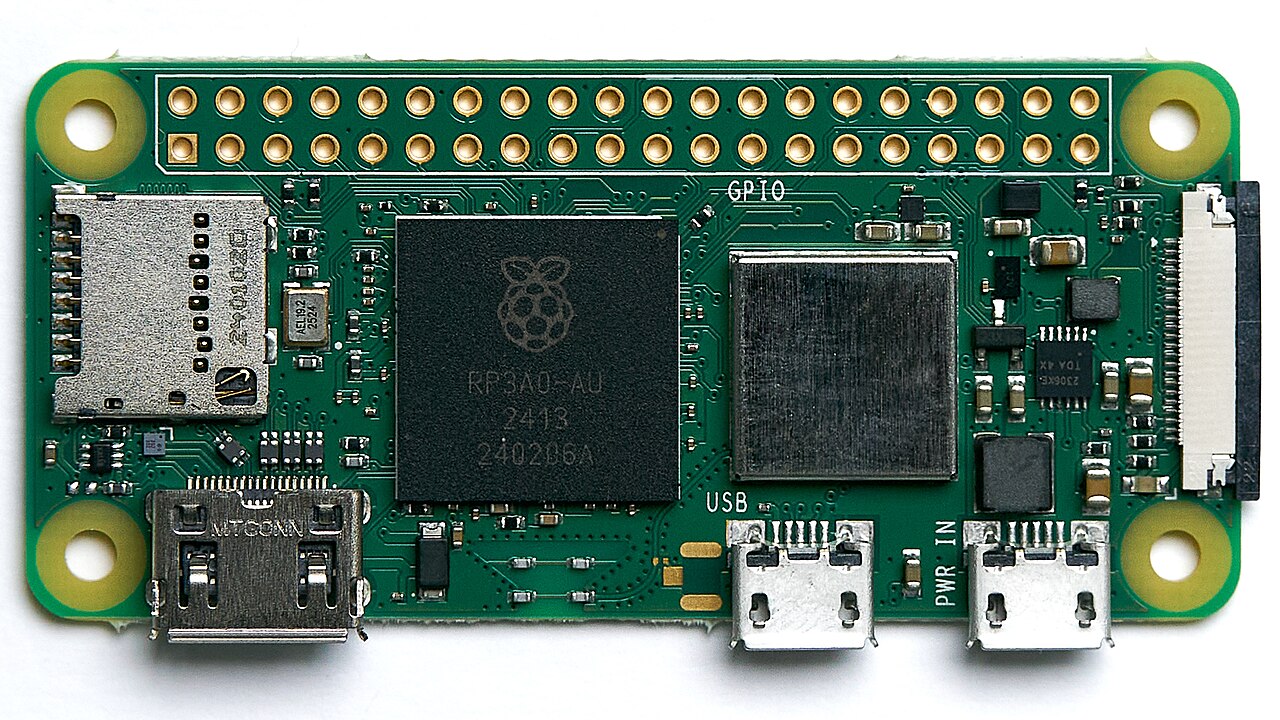
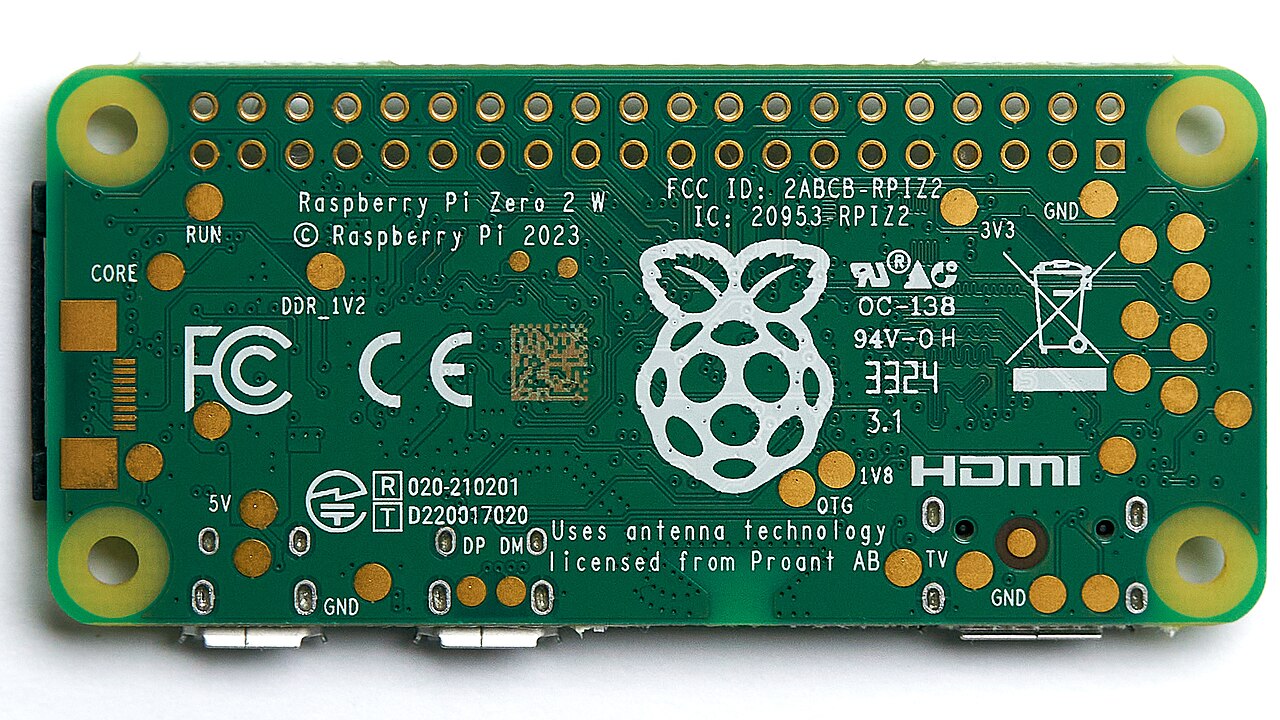
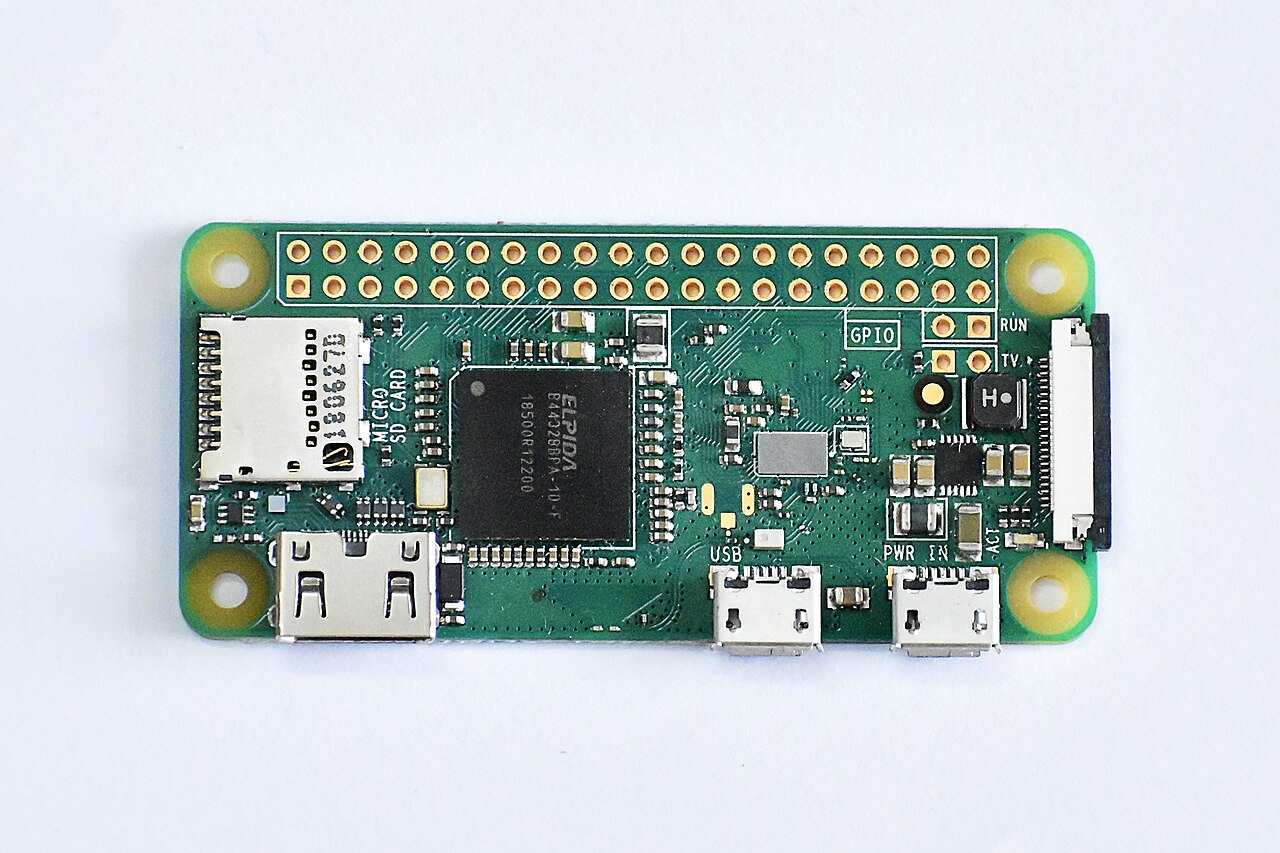
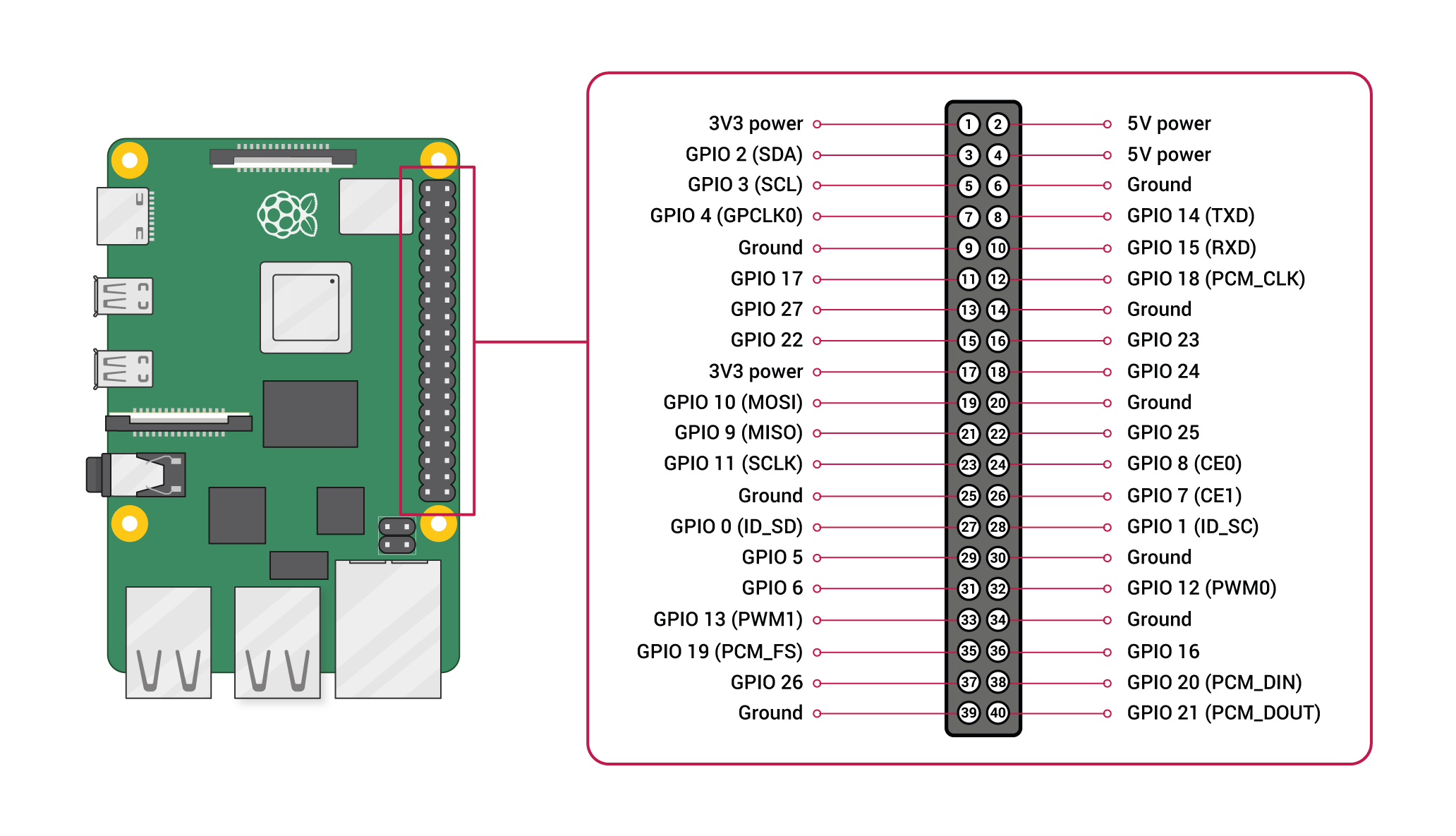
Pinout diagram
| Attr | Specs | verified |
|---|---|---|
soc | Raspberry Pi RP3A0 — the company's first System-in-Package (SiP): the Broadcom BCM2710A1 die (same silicon as the BCM2837A1 in the launch Raspberry Pi 3) plus a 4 Gbit (512 MB) Micron LPDDR2 die and decoupling capacitors in one package (packaged by ASE; "AU" marking = gold bond wires). (RP3A0 official doc page; launch post "Packaging magic") | ✔ |
cpu | quad-core Arm Cortex-A53, 64-bit (ARMv8-A), @ 1 GHz ("Arm cores slightly down-clocked to 1GHz" vs Pi 3); official doc: with a heatsink it "can be potentially overclocked to 1.2 GHz". Performance ≈ 5× the original Zero in multi-threaded sysbench. (RP3A0 doc; launch post) | ✔ |
gpu_media | H.264 + MPEG-4 decode (1080p30), H.264 encode (1080p30), OpenGL ES 1.1/2.0 (VideoCore IV-generation media stack of the BCM2837 family). (launch post spec list) | ✔ |
ram | 512 MB LPDDR2 SDRAM, in-package, shared CPU/GPU. (RP3A0 doc) | ✔ |
storage | microSD slot only; no onboard storage, no eMMC/EEPROM. (launch post) | ✔ |
video_out | mini-HDMI port; composite video + reset available on unpopulated solder pads. (launch post spec list) | ✔ |
camera | CSI-2 camera connector (mini 22-pin, 0.5 mm fine pitch, 11.5 mm width — like Zero v1.3+; needs the short Zero camera flex). (launch post; official docs Zero series) | ✔ |
usb | 1 × USB 2.0 interface with OTG on the data micro-USB socket; a second micro-USB socket is power-only. (launch post spec list; official docs: "2 × micro-USB ports (one for input power, one for external devices)") | ✔ |
wireless | 2.4 GHz single-band 802.11b/g/n Wi-Fi (35 Mb/s) and Bluetooth 4.2 + BLE; on-board antenna under a metal shield can — no u.FL connector (the footprint on the board is "for compliance testing only"); FCC modular certification (first in the Zero line), easing product integration. (official docs Zero table; launch post "Sealed wireless in a can" + comments Q&A) | ✔ |
gpio | HAT-compatible 40-pin I/O header footprint, electrically identical to the rest of the Pi family — 3.3 V logic, I²C/SPI/UART/hardware PWM available; no ADC/DAC. GPIO current: 16 mA per pin, 50 mA total across all pins. (launch post; official power doc; pinout.xyz) | ✔ |
identification | board type 0x12 in the revision code; shipping code 902120; device tree raspberrypi,model-zero-2-w / CPU brcm,bcm2837. (revision codes doc) | ✔ |
power | 5 V via micro-USB; official recommendation 2 A PSU (a new in-house 2.5 A micro-B PSU launched alongside at $8); USB peripheral current "limited by PSU, board, and connector ratings only". (official power doc table; launch post "New Raspberry Pi Zero 2 PSU") | ✔ |
consumption | typical bare-board active 350 mA (≈1.8 W at 5 V) — vs 150 mA for Zero W. (official power doc table) | ✔ |
thermal | hard limit 85 °C on all Pi models (ARM throttled progressively 80–85 °C, ARM+GPU at 85 °C; read with vcgencmd measure_temp). The board uses thick internal copper layers as a heatspreader; at 20 °C ambient an uncased Zero 2 W runs a LINPACK stress test "indefinitely without throttling". (frequency management doc; launch post "PCB magic") | ✔ |
mechanical | identical Raspberry Pi Zero form factor (65 mm × 30 mm) — "Almost all cases and accessories designed for Zero should work perfectly with the new board". (launch post; dimensions from the original Zero launch post) | ✔ |
- Manufacturer / developer: Raspberry Pi Ltd. (trading as Raspberry Pi; board and RP3A0 package designed in-house by Simon Martin, who also designed the original Zero), built at the Sony UK Technology Centre in Pencoed, South Wales. (official launch post, retrieved 2026-10-13)
- Launch: 28 October 2021, at US$15 — "New product: Raspberry Pi Zero 2 W on sale now at $15" (Eben Upton). Sold from launch day through Approved Resellers in UK/EU/US/Canada/HK; a free unit was bundled to new The MagPi subscribers. (launch post; Wikipedia, Raspberry Pi series — cites Upton 28 Oct 2021)
- Status: Active / shipping. Official FAQ at launch: "We aim to keep Zero 2 W in production until at least January 2028." The current official docs list it with no EOL notice. (launch post FAQ; official docs, Zero series table)
- Launch-price context: $5 more than Zero W; Zero and Zero W were explicitly not discontinued ("joins the Zero family as a third member"). (launch post FAQ)
- Variants: - Zero 2 W (1.0) — GPIO header unpopulated; revision code 902120 (Sony UK, 512 MB). (revision codes doc) - Zero 2 W "with headers" — pre-soldered 40-pin header (official docs naming; Wikipedia calls this variant Zero 2 WH, US$18). (official docs Zero table; Wikipedia) - Only one SDRAM option ever: the launch FAQ states a 1 GB version was rejected ("1GB LPDDR2 monodie are not available"). (launch post FAQ)
+ Strengths
- Pi 3-class compute in a Zero: the RP3A0 SiP packs the Raspberry Pi 3's BCM2710A1 quad Cortex-A53 die + 512 MB RAM into the original 65×30 mm Zero board — ~5× the original Zero's multi-threaded performance at $15. (launch post)
- Raspberry Pi's first in-house System-in-Package — the packaging trick (SiP instead of PoP or discrete DRAM) that made a faster Zero physically possible on a single-sided board; designed by Simon Martin (ex-Broadcom, designer of BCM2763 and the original Zero). (launch post "Packaging magic")
- First 64-bit Zero: ARMv8 Cortex-A53 (the rest of the Zero line was 32-bit ARMv6), enabling aarch64 distros such as OpenWrt's bcm2710 target. (RP3A0 doc; OpenWrt profiles.json)
- FCC-modular-certified radio (like the 3B+ onward) — certified-module status reduces compliance work when embedding the board in a product. (launch post)
- Drop-in Zero upgrade: same board outline, mini-HDMI, microSD, CSI-2 pads, composite/reset solder points, and pHAT-compatible 40-pin footprint; existing Zero cases fit. (launch post)
- USB OTG gadget + device-mode boot: the data port can enumerate as a USB device (g_ether/serial/MSC gadget; usbboot reflashing over USB) — the classic "tiny Linux USB stick" trick. (bootflow-legacy doc; usbboot)
- Longevity commitment: production planned at least until January 2028 — attractive for industrial/embedded designs. (launch post FAQ)
- Cultural note: like the 2015 Zero, it shipped as The MagPi covermount gift to subscribers; launch volume was capped by the global chip shortage (~200 k units in 2021, 250 k more in H1 2022). (launch post; Wikipedia)
− Weaknesses
- No undervoltage detection — official docs: low-voltage detection exists on all models since the Pi B+ (2014) "except the Zero range". A sagging 5 V rail produces no kernel-log warning; symptoms are SD corruption and lockups with no clue. Use a good 2 A supply and short, thick cable. (official power doc)
- No WPA3 support — the Wi-Fi combo (Cypress/Infineon 43430-class, WPA2-era firmware) cannot join WPA3-only networks; users with modern routers in WPA3 mode are locked out. Long-open upstream issue, filed on a Zero 2 W: raspberrypi/linux#4718 "Wi-Fi Protected Access 3 (WPA3) support" (open since 19 Nov 2021).
- brcmfmac RX errors / Wi-Fi dropouts on newer kernels — Zero 2 W reports of brcmfmac … read … failed: -5, mmc1: Controller never released inhibit bit(s), audio-stream dropouts after the Bookworm upgrade: raspberrypi/firmware#1962 "RX Wifi errors with Bookworm" (open). The broader Broadcom-WLAN freeze family on this SoC generation is tracked in raspberrypi/linux#1342 (481+ comments, Wifi Issue label).
- 2.4 GHz only, 802.11n max (35 Mb/s) — no 5 GHz, no ac; in congested 2.4 GHz environments real throughput and latency suffer; no external-antenna option (on-board antenna only). (official docs Zero table; launch post comments Q&A)
- 512 MB RAM ceiling — unchanged from the 2015 Zero; heavy browsing/compiling needs swap (which murders cheap SD cards) and the launch FAQ confirms 1 GB will never exist in this package. (launch post FAQ)
- Runs hot under sustained load — 350 mA typical and a fanless 65×30 mm board mean surface temperatures climb; throttling engages at 85 °C (hard limit, 80–85 °C progressive). Heatsinks are optional for safety but help sustained performance. (frequency management doc; official power doc)
- Single data port, power/data split — powering and attaching a USB device needs two micro-USB cables (or a gadget/Y-cable hack); OTG host devices need a bus-powered hub. (official docs Zero series)
- No EEPROM / legacy boot — boot code lives as files (bootcode.bin, start.elf, config.txt) on the FAT partition; a bad config.txt means pulling the card, and there is no network self-boot recovery like Pi 4/5 EEPROMs offer. (bootflow-legacy doc)
- Launch-era scarcity — "Sadly, Zero 2 W isn't immune to the current global semiconductor shortage" (~200 k units planned for 2021); reseller limits and scalping followed. (launch post; Wikipedia on the shortage's effect on Pi availability)
- Retour d'expérience expert expert — expert-raspberrypi
- Retour d'expérience sur la Zero 2 W avec le RP3A0. C'est impressionnant de voir le SiP intégrer le die BCM2710A1 et 512 Mo de LPDDR2 dans un si petit format, mais attention au thermal throttling. Bien que les docs mentionnent un overclocking potentiel à 1.2 GHz avec un heatsink, la fréquence native… — expert-raspberrypi
- Merci pour ce rappel sur l'undervoltage, c'est un piège classique. J'utilise cette carte pour un projet IoT compact et l'encombrement est imbattable grâce au packaging ASE. Par contre, j'ai lu que le marquage 'AU' indiquait des fils de liaison or, est-ce que cela a un impact réel sur la dissipation… — maker-tinker
- La question de l'alim est critique. Sur les tests que j'ai faits, la Zero 2 W tire davantage en charge que l'original, et sans le voyant rouge ou le log d'undervoltage, c'est le flou total. Pour la chaleur, le SiP est dense mais le boîtier évacue mal si on n'a pas de flux d'air. Le gain de performa… — pi-hacker-99
Community feedback and projects
- The Wi-Fi connection between my Raspberry Pi Zero 2W's and my Unifi Wi-Fi system is intermittent forum.digikey.com
- Raspberry Pi Zero 2 W with header forum.digikey.com
- First Impressions with the Raspberry Pi Zero 2 W blog.alexellis.io
- Raspberry Pi Zero 2 W die shots electronupdate.blogspot.com
- Raspberry Pi Zero 2 W external antenna mod shop.sb-components.co.uk
Content not available yet.
- Official launch post (specs, FAQ, SiP/PCB/radio details)
- Official product page
- RP3A0 SoC doc page
- Zero series hardware table (SoC/RAM/wireless per model)
- Power supplies & consumption tables
- Frequency & thermal management (85 °C policy)
- Revision codes (902120 = Zero 2 W 1.0; board type 0x12)
- Legacy boot flow (BCM2837 family, USB device boot)
- Arm-local peripherals datasheet for BCM2836/2837/RP3A0 (RP-008250-DS)
- Arm-local peripherals datasheet for BCM2836/2837/RP3A0 (RP-008250-DS)
- GPIO pinout reference
- usbboot (USB device-mode recovery)
- raspberrypi/linux#4718
- raspberrypi/firmware#1962
- raspberrypi/linux#1342
- OpenWrt target/profiles for Zero 2 W
- Wikipedia series article (Zero family history, pricing)
- No undervoltage detection — official docs: low-voltage detection exists on all models since the Pi B+ (2014) "except the Zero range". A sagging 5 V rail produces no kernel-log warning; symptoms are SD corruption and lockups with no clue. Use a good 2 A supply and short, thick cable. (official power doc)
- No WPA3 support — the Wi-Fi combo (Cypress/Infineon 43430-class, WPA2-era firmware) cannot join WPA3-only networks; users with modern routers in WPA3 mode are locked out. Long-open upstream issue, filed on a Zero 2 W: raspberrypi/linux#4718 "Wi-Fi Protected Access 3 (WPA3) support" (open since 19 Nov 2021).
- brcmfmac RX errors / Wi-Fi dropouts on newer kernels — Zero 2 W reports of brcmfmac … read … failed: -5, mmc1: Controller never released inhibit bit(s), audio-stream dropouts after the Bookworm upgrade: raspberrypi/firmware#1962 "RX Wifi errors with Bookworm" (open). The broader Broadcom-WLAN freeze family on this SoC generation is tracked in raspberrypi/linux#1342 (481+ comments, Wifi Issue label).
- 2.4 GHz only, 802.11n max (35 Mb/s) — no 5 GHz, no ac; in congested 2.4 GHz environments real throughput and latency suffer; no external-antenna option (on-board antenna only). (official docs Zero table; launch post comments Q&A)
- 512 MB RAM ceiling — unchanged from the 2015 Zero; heavy browsing/compiling needs swap (which murders cheap SD cards) and the launch FAQ confirms 1 GB will never exist in this package. (launch post FAQ)
- Runs hot under sustained load — 350 mA typical and a fanless 65×30 mm board mean surface temperatures climb; throttling engages at 85 °C (hard limit, 80–85 °C progressive). Heatsinks are optional for safety but help sustained performance. (frequency management doc; official power doc)
- Single data port, power/data split — powering and attaching a USB device needs two micro-USB cables (or a gadget/Y-cable hack); OTG host devices need a bus-powered hub. (official docs Zero series)
- No EEPROM / legacy boot — boot code lives as files (bootcode.bin, start.elf, config.txt) on the FAT partition; a bad config.txt means pulling the card, and there is no network self-boot recovery like Pi 4/5 EEPROMs offer. (bootflow-legacy doc)
- Launch-era scarcity — "Sadly, Zero 2 W isn't immune to the current global semiconductor shortage" (~200 k units planned for 2021); reseller limits and scalping followed. (launch post; Wikipedia on the shortage's effect on Pi availability)
- Premier démarrage de la Zero 2 W sans écran (headless) debutant Schéma : IMG-zero-2w-debutant-1-installation-raspberry-pi-os-headless.svg — Zero 2 W avec carte microSD, alimentation micro-USB 2 A (port POWER uniquement) et PC affichant Raspberry Pi Imager.
- Se connecter au Wi-Fi (et comprendre les limites 2,4 GHz / WPA2) debutant Schéma : IMG-zero-2w-debutant-2-connexion-wifi-24ghz.svg — Zero 2 W et sa routeur Wi-Fi, onde 2,4 GHz uniquement, cadenas WPA2, terminal affichant « iw wlan0 link ».
- Surveiller la température et la fréquence de la Zero 2 W debutant Schéma : IMG-zero-2w-debutant-3-surveiller-temperature-zero2w.svg — Zero 2 W avec dissipateur, flèches thermiques, terminal affichant vcgencmd measure_temp et un graphique de température.
- GPIO en Python : LED et bouton avec gpiozero intermediaire Schéma : IMG-zero-2w-intermediaire-1-led-bouton-gpiozero.svg — connecteur 40 broches de la Zero 2 W, LED + 330 Ω sur la broche physique 11 (GPIO17), bouton sur la broche 13 (GPIO27) vers GND.
- Le tour de passe-passe « clé USB Linux » : Ethernet sur USB (g_ether) intermediaire Schéma : IMG-zero-2w-intermediaire-2-ethernet-gadget-usb.svg — Zero 2 W branchée directement sur le port USB d'un ordinateur portable via son port données, interface réseau « Remote-ECM » apparaissant sur le portable, SSH par-dessus.
- Serveur de blocage de pub réseau avec Pi-hole intermediaire Schéma : IMG-zero-2w-intermediaire-3-pihole-blocage-pub.svg — Zero 2 W en rôle de DNS entre les appareils de la maison et la box, bannières publicitaires barrées, tableau de bord web.
- Remettre une Zero 2 W en état de boot : usbboot et boot files avance Schéma : IMG-zero-2w-avance-1-recovery-usb-usbboot.svg — Zero 2 W sans carte microSD reliée à un PC par son port données, outil rpiboot listant un périphérique 0a5c:2711, microSD montée séparément sur le PC.
- Logger Python température + qualité Wi-Fi avec gestion de pannes réseau avance Schéma : IMG-zero-2w-avance-2-logger-temperature-wifi.svg — Zero 2 W envoyant périodiquement température et RSSI vers un serveur local, gestion d'erreurs brcmfmac, file d'attente en mémoire.
- Routeur de voyage : installer OpenWrt sur la Zero 2 W avance Schéma : IMG-zero-2w-avance-3-routeur-voyageur-openwrt.svg — Zero 2 W sous OpenWrt en point d'accès dans une chambre d'hôtel, laptop connecté en USB gadget, uplink Wi-Fi 2,4 GHz.
Code library — examples written for this board
clignotante.pyPythonbouton-gpio.pyPythoncapteur-i2c.shBashsurveillance-temperature.shBashcapteur-dht11.pyPythonservo-pwm-sysfs.shBashserveur-web-capteur.pyPythonwifi-station.shBashjournal-cron.shBashveilleur-systemd.pyPython
Examples and repos found online
- raspberrypi/linux github.com
- joan2937/pigpio github.com
- retropie/retropie-setup github.com