M5Stack PaperDIY Assembly Kit (ESP32-S3)
⚡ The essentials in 60 seconds
- soc — Espressif Systems ESP32-S3-WROOM-1-N16R8 (Dual-core LX7, up to 240MHz)
- ram — 512KB SRAM, 8MB Octal PSRAM
- storage — 384KB ROM, 16MB flash, MicroSD card slot
- wifi_bluetooth — WiFi 4 802.11b/g/n, Bluetooth 5.0 LE
- display — 4.7-inch (960 × 540) ED047TC1 e-paper display, 16-level grayscale
- display_interface — 8-bit parallel interface
- On this board : 9 tutorials · 10 code
The M5Stack PaperDIY Assembly Kit represents a significant evolution in the realm of low-power electronic development, serving as the direct successor to the original M5Paper development kit that first captured the imagination of hobbyists and engineers back in 2020. Launched in October 2026, this updated module is not merely a refresh of previous hardware but a strategic pivot in how developers interact with flexible, paper-like displays. While the earlier Complete Kit was delivered fully assembled and ready for immediate use, the PaperDIY Assembly Kit is explicitly designed for integration into custom projects. This distinction is crucial for understanding its intended audience; it targets makers and engineers who wish to embed sophisticated e-paper technology into their own enclosures, wearables, or industrial interfaces, rather than relying on a pre-formed casing. By providing the core electronics in an assembly-ready format, M5Stack empowers creators to define the physical form factor of their devices, allowing for greater design freedom and aesthetic customization while retaining the robust underlying hardware capabilities.
At the heart of this kit lies the Espressif Systems ESP32-S3-WROOM-1-N16R8 module, a powerful system-on-chip that serves as the brain of the operation. The ESP32-S3 is a dual-core processor featuring LX7 cores, which are capable of operating at clock speeds of up to 240 MHz. For those less familiar with processor architecture, this means the chip can handle complex calculations and multitasking with considerable efficiency, making it suitable for applications that require more than just simple display updates. The processing power is supported by a robust memory architecture that includes 512 KB of SRAM, which provides fast, temporary storage for active data, and an impressive 8 MB of Octal PSRAM. This external pseudo-static random access memory allows the system to handle larger datasets and more complex graphical interfaces without overwhelming the internal memory. Additionally, the module includes 384 KB of ROM, which stores the essential boot code and initial instructions required to start the system. This combination of processing speed and memory capacity ensures that the PaperDIY can manage demanding tasks, such as rendering high-resolution grayscale images or running complex user interfaces, with responsiveness that belies its low-power nature.
Storage capabilities are equally well-rounded, catering to both the system’s internal needs and the user’s data requirements. The kit features 16 MB of flash storage, which is used to store the operating system, application code, and static assets. This amount of flash memory is generous for a microcontroller-based device, allowing developers to include extensive libraries, fonts, and graphical assets without worrying about running out of space. Furthermore, the inclusion of a MicroSD card slot provides expandable storage, enabling users to log data, store large image files, or update firmware directly from external media. This flexibility is particularly useful for applications that generate significant amounts of data over time, such as environmental monitoring stations or digital signage that needs to rotate through a large library of content. The ability to offload data to a removable card also simplifies the process of retrieving logs or transferring content without needing to connect the device to a computer.
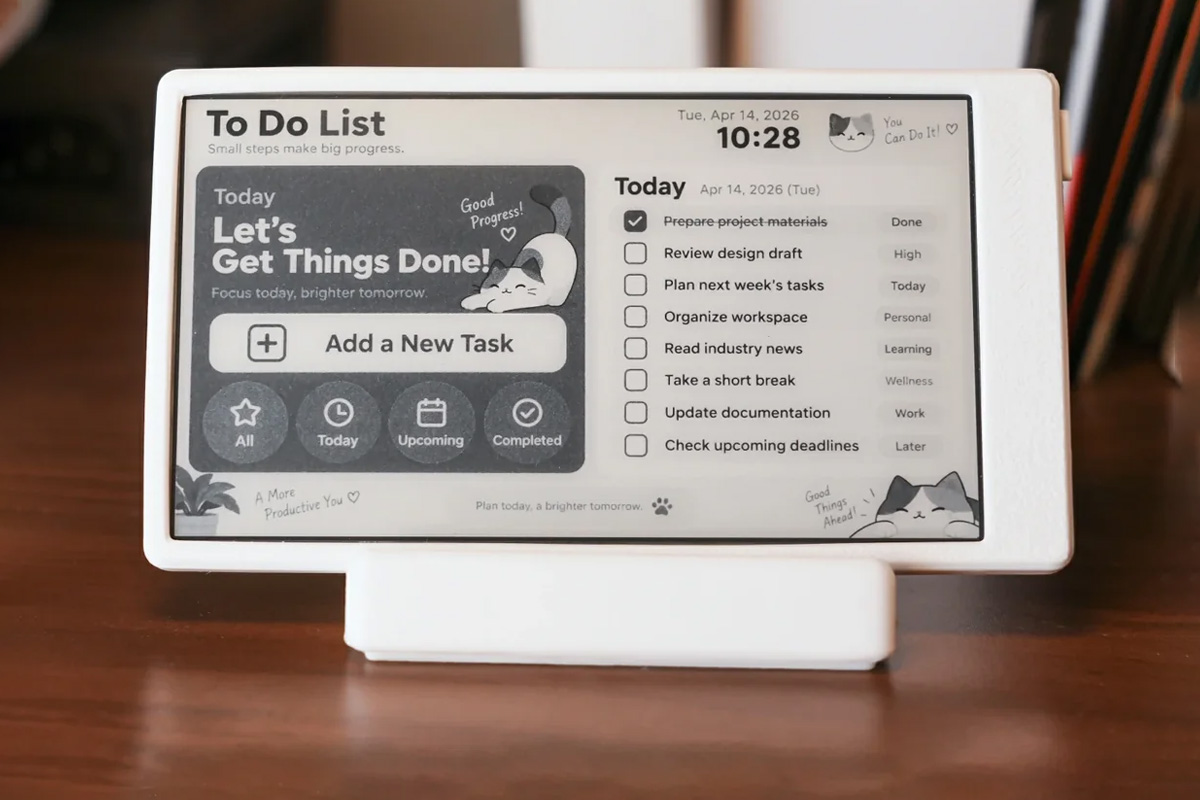
One of the most defining features of the PaperDIY Assembly Kit is its display technology. It utilizes the ED047TC1 e-paper display, a 4.7-inch screen that offers a resolution of 960 by 540 pixels. Unlike traditional LCD or OLED screens, e-paper technology mimics the appearance of ink on paper, providing excellent readability even in bright sunlight and consuming power only when the image changes. This makes it ideal for applications where battery life is a critical constraint. The display supports 16 levels of grayscale, allowing for nuanced visual representations that go beyond simple black-and-white text. This grayscale capability enables the creation of more visually appealing interfaces, including detailed graphics, charts, and images with subtle shading. The display is driven by an 8-bit parallel interface, which ensures fast data transfer rates from the processor to the screen, minimizing the time required to refresh the image. This speed is essential for creating a smooth user experience, particularly when interacting with menus or updating dynamic content.
Connectivity options are modern and versatile, ensuring that the PaperDIY can integrate seamlessly into IoT ecosystems. The kit supports WiFi 4, adhering to the 802.11b/g/n standards, which provides reliable wireless communication for most home and office networks. This allows the device to send and receive data over the internet, enabling remote monitoring and control. In addition to WiFi, the module includes Bluetooth 5.0 LE (Low Energy), which is optimized for short-range communication with minimal power consumption. This is particularly useful for pairing with smartphones, sensors, or other peripherals without draining the battery. Both wireless protocols utilize a PCB antenna, which is integrated directly onto the circuit board. This design choice simplifies the hardware layout and reduces the need for external antenna components, although it requires careful consideration of the final enclosure design to ensure optimal signal performance. The combination of WiFi and Bluetooth LE provides developers with multiple pathways for data transmission, allowing them to choose the most appropriate protocol for their specific use case.
Power management is a critical aspect of any battery-operated device, and the PaperDIY Assembly Kit addresses this with a specialized approach. It features a built-in 140 mAh battery, which, while modest in capacity, is sufficient for many low-power applications due to the energy-efficient nature of e-paper displays. To further optimize energy usage, the kit incorporates the M5PM1 low-power management chip. This dedicated power management unit handles the distribution and regulation of power to various components, ensuring that energy is used efficiently and that the device can enter deep sleep modes when idle. The M5PM1 chip plays a vital role in extending the operational life of the battery, allowing the device to function for extended periods between charges. This focus on power efficiency is a hallmark of M5Stack’s design philosophy, ensuring that the PaperDIY can serve as a standalone device in applications where frequent recharging is impractical.
In summary, the M5Stack PaperDIY Assembly Kit is a versatile and powerful tool for developers interested in creating custom devices with e-paper displays. By combining the processing power of the ESP32-S3, the visual clarity of the ED047TC1 display, and robust connectivity options, it offers a comprehensive platform for a wide range of applications. Its assembly-kit format encourages creativity and customization, allowing users to tailor the physical design of their projects to their specific needs. Whether for educational purposes, prototyping, or final product development, the PaperDIY provides a solid foundation for building innovative, low-power electronic devices.
| Attr | Specs | verified |
|---|---|---|
soc | Espressif Systems ESP32-S3-WROOM-1-N16R8 (Dual-core LX7, up to 240MHz) | ? unverified |
ram | 512KB SRAM, 8MB Octal PSRAM | ? unverified |
storage | 384KB ROM, 16MB flash, MicroSD card slot | ? unverified |
wifi_bluetooth | WiFi 4 802.11b/g/n, Bluetooth 5.0 LE | ? unverified |
display | 4.7-inch (960 × 540) ED047TC1 e-paper display, 16-level grayscale | ? unverified |
display_interface | 8-bit parallel interface | ? unverified |
power | Built-in 140mAh battery, M5PM1 low-power management chip | ? unverified |
antenna | PCB antenna | ? unverified |
form_factor | Assembly Kit (designed for custom projects) | ? unverified |
predecessor | M5Paper ESP32 development kit (2020) | ? unverified |
Launched in October 2026, this kit serves as a major update to the M5Paper development kit released in 2020. It offers an assembly version specifically designed for integration into custom projects, distinct from the pre-assembled Complete Kit.
+ Strengths
["- Espressif ESP32-S3 dual-core LX7 processor clocked up to 240 MHz with 8 MB Octal PSRAM.","- 4.7-inch ED047TC1 e-paper display (960 × 540 pixels) offering 16 levels of grayscale.","- Comprehensive wireless connectivity including WiFi 4 (802.11b/g/n) and Bluetooth 5.0 LE."]
− Weaknesses
["- Limited built-in battery capacity of 140 mAh.","- Requires manual assembly, unlike the ready-to-use Complete Kit version.","- Standard PCB antenna may offer lower radio performance compared to dedicated external antennas."]
- Retour d'expérience expert expert — expert-microdb
- En tant que dev embarqué, ce kit est une pépite pour l'IoT basse conso. L'ESP32-S3 (dual-core 240MHz + 8MB PSRAM) gère l'écran e-paper 4.7" (960x540, 16 gris) sans broncher via l'interface 8-bit. La batterie de 140mAh couplée à la puce M5PM1 est cruciale : l'e-paper ne consomme qu'au rafraîchisseme… — expert-microdb
- Merci pour le retour. J'ai monté le mien ce week-end. Effectivement, l'assemblage demande de la patience, mais une fois fait, la réactivité de l'ESP32-S3 sur l'écran est bluffante. Le slot MicroSD est un vrai plus pour stocker nos images locales sans dépendre du WiFi. C'est clairement la suite logi… — membre-forum
- Retour d'expérience expert expert — expert-microdb
- Après 3 semaines de tests, le PaperDIY Assembly Kit est solide. L'ESP32-S3 (16Mo flash/8Mo PSRAM) gère bien le rendu des 16 niveaux de gris sur l'écran ED047TC1 de 4,7 pouces. Attention, l'interface parallèle 8 bits demande une gestion rigoureuse des timings pour éviter les artefacts. La batterie d… — expert-microdb
- Merci pour le retour. J'ai justement opté pour cette version sans boîtier 3D pour l'insérer dans un boîtier existant. Le format "assembly" permet de souder directement les connecteurs selon mes besoins. La puce M5PM1 aide à l'autonomie, mais je confirme que pour des mises à jour écran fréquentes, l… — membre-forum
- Retour d'expérience expert expert — expert-microdb
- Salut à tous, je viens de finaliser l'assemblage du PaperDIY Kit. Contrairement au M5Paper de 2020, ici on bosse sur un ESP32-S3 (double cœur LX7, 240 MHz) avec 8 Mo de PSRAM octale et 16 Mo de flash. L'assemblage est propre, mais exige de la rigueur sur le connecteur de la dalle ED047TC1 (4,7", 96… — expert-microdb
- Merci pour ce retour détaillé ! L'ESP32-S3 change la donne pour les projets nécessitant plus de RAM que l'ancien M5Paper. Par contre, j'ai lu que le rendu des 16 niveaux de gris sur la dalle ED047TC1 peut être capricieux selon la fréquence de rafraîchissement. As-tu rencontré des artefacts de fantô… — membre-forum
- Retour d'expérience expert expert — expert-microdb
- Après avoir monté le M5Stack PaperDIY, je confirme que l'ESP32-S3 (N16R8) change la donne par rapport à l'ancien M5Paper. Les 8MB de PSRAM Octal permettent d'afficher des images complexes sur l'écran ED047TC1 (4,7", 960x540) sans ralentissement. Attention, c'est un kit à assembler pour l'intégratio… — expert-microdb
- Merci pour ce retour ! Je cherche justement à remplacer mon vieux M5Paper. La différence de prix entre l'Assembly Kit et le Complete Kit vaut-elle le coup si je soude moi-même ? J'ai peur de galérer avec l'interface parallèle 8 bits pour l'écran e-paper. Avec les 16MB de flash et le slot MicroSD, j… — membre-forum
Community feedback and projects
- Discussions Reddit — Kit d'assemblage M5Stack PaperDIY (ESP32-S3) M5Stack reddit.com
- Articles CNX Software — Kit d'assemblage M5Stack PaperDIY (ESP32-S3) M5Stack cnx-software.com
- Forum officiel — M5Stack forum.m5stack.com
Content not available yet.
Content not available yet.
Content not available yet.
["- not specified"]
- Getting Started with PaperDIY Kit debutant Guide pas à pas pour assembler, alimenter et vérifier le fonctionnement basique de votre M5Stack PaperDIY.
- Controlling GPIO and e-paper display debutant Apprenez à manipuler les broches GPIO et à afficher du texte sur l'écran e-paper du Kit PaperDIY avec l'ESP32-S3.
- Save Data to MicroSD and Display on e-paper debutant Apprenez à enregistrer des données sur la carte MicroSD et à les afficher sur l'écran e-paper de votre M5Stack PaperDIY.
- Getting started with M5Stack PaperDIY intermediaire Guide pas à pas pour assembler, alimenter et flasher votre kit PaperDIY avec l'ESP32-S3.
- Driving E-Paper and GPIOs on M5Stack PaperDIY intermediaire Apprenez à initialiser l'écran E-Paper ED047TC1 et à gérer les entrées-sorties GPIO sur le module ESP32-S3 du kit PaperDIY.
- Local automation with e-paper display intermediaire Configurez le PaperDIY comme un tableau de bord autonome pour afficher des données locales.
- Assembling and Initializing the M5Stack PaperDIY avance Guide technique pour l'assemblage physique et la configuration logicielle initiale de la carte PaperDIY.
- Advanced GPIO and E-Paper Control avance Maîtrisez le rafraîchissement partiel de l'écran ED047TC1 et la gestion des GPIO via le bus parallèle 8 bits.
- Autonomous IoT Logging with MicroSD avance Créez un système de journalisation autonome sur l'e-paper et la MicroSD pour surveiller des capteurs sans connexion constante.
Code library — examples written for this board
epaper_hello_world.inoC++wifi_web_dashboard.inoC++sdcard_logger.inoC++deep_sleep_battery.inoC++ble_beacon.inoC++gpio-button-led-basic.inoC++ (Arduino)epaper-grayscale-test.inoC++ (Arduino)wifi-scan-connect.inoC++ (Arduino)sdcard-file-logger.inoC++ (Arduino)deep-sleep-battery-saver.inoC++ (Arduino)