Raspberry Pi Model B Revision 2 (2012) — Board Sheet
⚡ The essentials in 60 seconds
- soc — Broadcom BCM2835 — single-core 32-bit ARM1176JZF-S (ARMv6, VFPv2) at 700 MHz + VideoCore IV GPU (~250 MHz; OpenGL ES 2.0, ~24 GFLOPS; 1080p30 H.264 encode/decode; MPEG-2/VC-1 via paid license keys). (Wikipedia)
- ram — 512 MB LP-DDR shared CPU/GPU (doubled from 256 MB in Oct 2012; split via gpu_mem=). (Wikipedia + official blog)
- storage — none onboard; full-size SD card slot (SD 2.0, no microSD adapter). (Wikipedia)
- connectivity — 1× 10/100 Mbps Ethernet + 2× USB 2.0, all behind the SMSC LAN9512 combo chip on the single 480 Mbps USB bus; HDMI (full-size), 3.5 mm composite video, 3.5 mm analog audio. No WiFi/Bluetooth. (Wikipedia)
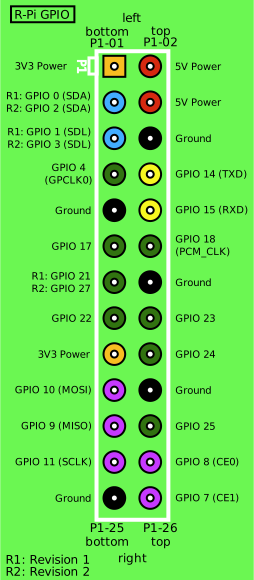
- gpio — 26-pin P1 header — 3.3 V/5 V, GND, I²C0 (GPIO0/1), SPI0, UART0, hardware PWM (GPIO18); 3.3 V logic, no ADC/DAC. Rev 2 removed the Rev 1 mounting holes and changed some passives/protection parts. (pinout.xyz; official docs)
- power — micro-USB 5 V (~700 mA design budget), resettable polyfuse F1; low-wattage consumption (order 1–4 W under load).
- On this board : 9 tutorials · 10 code
The Raspberry Pi Model B Revision 2, launched in September 2012, stands as a pivotal moment in the history of single-board computers, representing the point where the original Raspberry Pi design matured into a truly usable desktop-class device. Announced as a minor correction to the initial Model B, this revision is historically significant not just for its internal tweaks, but for a major hardware upgrade that arrived shortly after: the doubling of system memory. While the initial launch in early September 2012 retained the original 256 MB of RAM, boards shipped from October 15, 2012, onwards came equipped with 512 MB of LP-DDR memory. This increase, offered at the same price point of US$35, transformed the board’s capabilities, allowing it to run modern operating systems and multitask with a headroom that was previously unavailable at such a low cost. It is important to clarify that this "Revision 2" refers to the 2012 update of the original 26-pin Model B, distinct from the later "Model B+" which featured a different form factor and connector layout.
At the heart of this board lies the Broadcom BCM2835 System-on-Chip, a component that defined the first generation of Raspberry Pi hardware. This chip integrates a single-core 32-bit ARM1176JZF-S processor, based on the ARMv6 architecture, running at a clock speed of 700 MHz. For those unfamiliar with processor architectures, ARMv6 is an older instruction set that lacks some of the advanced features found in modern chips, such as hardware floating-point acceleration in the main CPU core, though it remains efficient for basic tasks. The BCM2835 also includes a VideoCore IV GPU, which handles graphics processing at approximately 250 MHz. This GPU is capable of OpenGL ES 2.0 rendering and, notably, hardware-accelerated encoding and decoding of 1080p H.264 video. This feature made the Pi a surprisingly capable media center, capable of playing high-definition video smoothly, although support for other formats like MPEG-2 and VC-1 required the purchase of specific license keys. The memory architecture is unique in that the 512 MB of RAM is shared between the CPU and the GPU, a design choice that requires users to configure how much memory is allocated to graphics via the gpu_mem setting in the configuration file.
Connectivity on the Model B Rev 2 is handled through a combination of ports that reflect the era’s standards. The board features one full-size HDMI port for digital video and audio output, alongside a 3.5 mm jack for composite video and another for analog audio, allowing connection to older televisions. For data and networking, it includes a 10/100 Mbps Ethernet port and two USB 2.0 ports. However, these are not independent; they are all managed by a single SMSC LAN9512 chip that connects to the main processor via a shared 480 Mbps USB bus. This shared bandwidth means that heavy network usage can compete with USB devices, such as external hard drives or keyboards, potentially limiting performance when both are active simultaneously. There is no built-in Wi-Fi or Bluetooth, so wireless connectivity requires external USB adapters. Storage is provided by a full-size SD card slot, which serves as the sole boot and storage medium. This reliance on SD cards was a common point of failure in the early days, as cheap cards wore out quickly under the constant read/write operations of a running operating system.
The physical interface for hobbyists and educators is the 26-pin P1 GPIO header. This header exposes the board’s general-purpose input/output pins, allowing users to connect sensors, LEDs, motors, and other electronic components. The pins operate at 3.3-volt logic levels and support various communication protocols including I2C, SPI, and UART, as well as hardware PWM on specific pins. It is crucial to note that this header does not include analog-to-digital converters, meaning it cannot directly read analog signals from sensors without additional hardware. A notable physical change in Revision 2 was the removal of the mounting holes present on Revision 1, a decision that frustrated many users who found it difficult to secure the board inside cases. This revision also coincided with a shift in manufacturing, as production moved to Sony’s Pencoed plant in Wales, UK, marking the first time Raspberry Pi boards were manufactured in the United Kingdom.
From a software perspective, the Model B Rev 2 was designed to run Linux-based operating systems. At the time of its release, Raspbian (now Raspberry Pi OS) was the recommended distribution, optimized for the ARMv6 architecture. Today, while modern releases of Raspberry Pi OS have dropped support for ARMv6, the board can still run legacy 32-bit images, such as the Buster version of Raspberry Pi OS, or community-supported distributions like RetroPie for retro gaming and LibreELEC for media centers. The boot process is straightforward: the board reads a bootloader file from the SD card’s FAT partition, meaning there is no complex EEPROM or USB boot mode; if the SD card is missing or corrupted, the board will not start. This simplicity made it accessible for beginners but also meant that SD card corruption was a frequent cause of "bricked" devices.
Despite its legacy status, the Model B Rev 2 remains a popular choice for educational projects and specific industrial applications where its small form factor and low power consumption are advantageous. It is capable of running lightweight servers, such as Pi-hole for network ad-blocking, or OctoPrint for controlling 3D printers. The board’s design encourages tinkering, with features like overclocking available through the configuration file, allowing users to push the CPU speed higher at the risk of instability or increased heat. The firmware includes safety mechanisms, such as throttling performance if the temperature exceeds 85°C or if undervoltage is detected, protecting the hardware from damage. While it has been superseded by more powerful models, the Raspberry Pi Model B Revision 2 remains a testament to the foundation that made the Raspberry Pi phenomenon possible, offering a complete, albeit modest, computing experience that continues to inspire makers and learners worldwide.
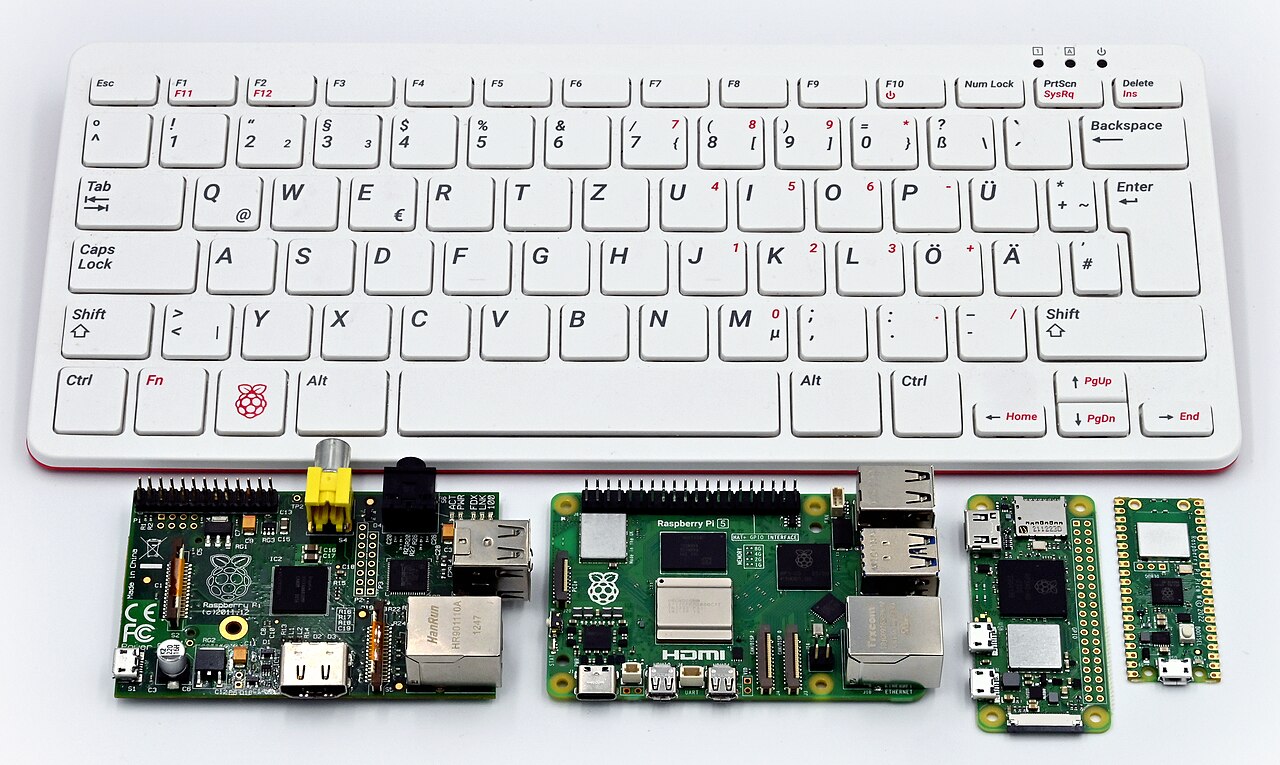
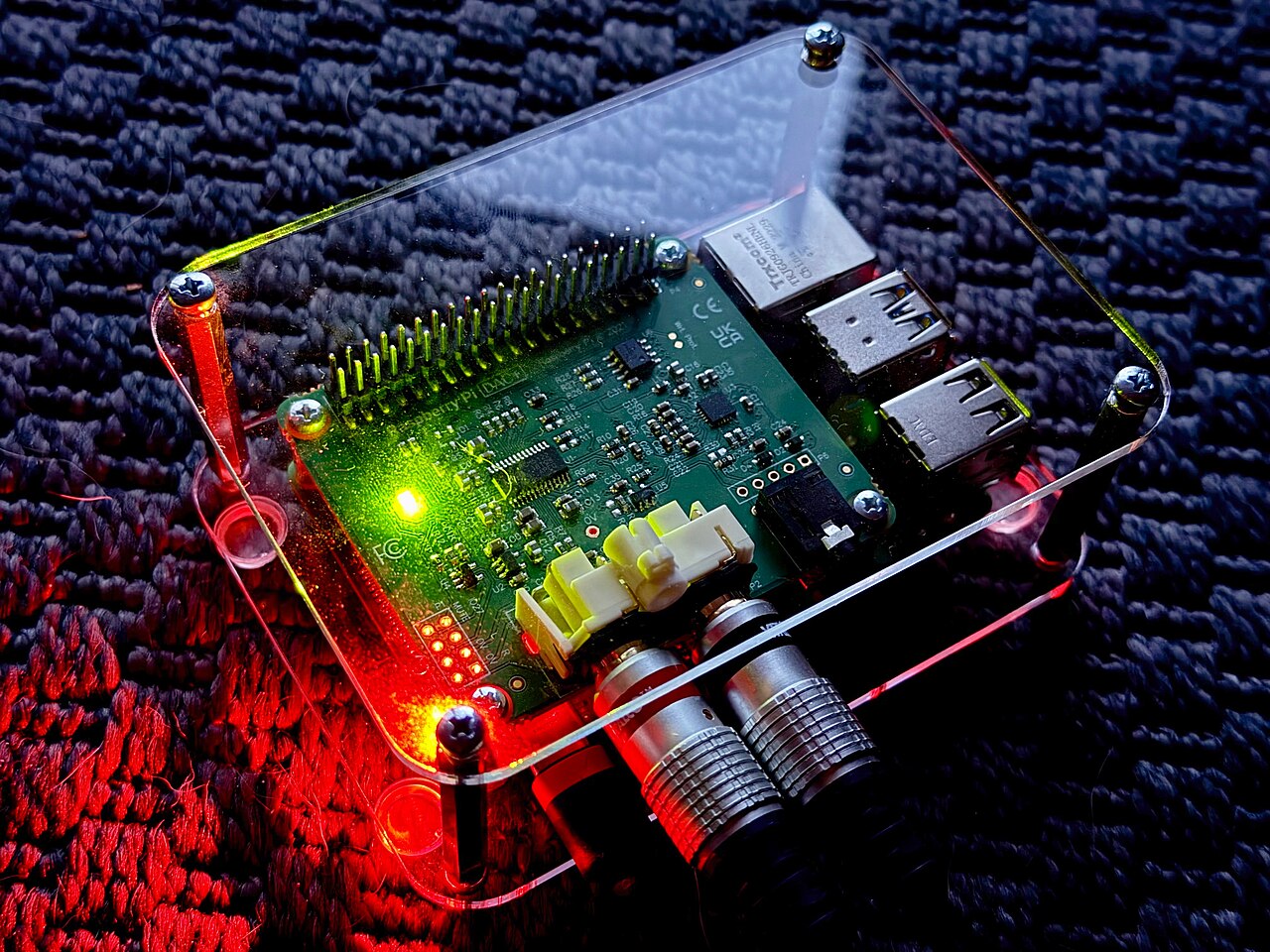
Pinout diagram
| Attr | Specs | verified |
|---|---|---|
soc | Broadcom BCM2835 — single-core 32-bit ARM1176JZF-S (ARMv6, VFPv2) at 700 MHz + VideoCore IV GPU (~250 MHz; OpenGL ES 2.0, ~24 GFLOPS; 1080p30 H.264 encode/decode; MPEG-2/VC-1 via paid license keys). (Wikipedia) | ✔ |
ram | 512 MB LP-DDR shared CPU/GPU (doubled from 256 MB in Oct 2012; split via gpu_mem=). (Wikipedia + official blog) | ✔ |
storage | none onboard; full-size SD card slot (SD 2.0, no microSD adapter). (Wikipedia) | ✔ |
connectivity | 1× 10/100 Mbps Ethernet + 2× USB 2.0, all behind the SMSC LAN9512 combo chip on the single 480 Mbps USB bus; HDMI (full-size), 3.5 mm composite video, 3.5 mm analog audio. No WiFi/Bluetooth. (Wikipedia) | ✔ |
gpio | 26-pin P1 header — 3.3 V/5 V, GND, I²C0 (GPIO0/1), SPI0, UART0, hardware PWM (GPIO18); 3.3 V logic, no ADC/DAC. Rev 2 removed the Rev 1 mounting holes and changed some passives/protection parts. (pinout.xyz; official docs) | ✔ |
power | micro-USB 5 V (~700 mA design budget), resettable polyfuse F1; low-wattage consumption (order 1–4 W under load). | ? unverified |
temperature | firmware throttles above 85 °C or on undervoltage detection. (Wikipedia) | ✔ |
- Manufacturer / developer: Raspberry Pi (Trading) Ltd. / Raspberry Pi Foundation, UK, with Broadcom. Rev 2-era boards coincide with the move of manufacturing to Sony's Pencoed (Wales) plant from September 2012. (Wikipedia, retrieved 2026-10-13)
- Launch: Revision 2.0 of the original Model B announced 6 September 2012 ("minor corrections"); from 15 October 2012 the Model B shipped with 512 MB RAM. Price remained US$35. (Wikipedia; blog: "Upcoming board revision", 6 Sep 2012 (archived); blog: "Model B Now Ships with 512 MB of RAM")
- Status: End-of-life / legacy. Superseded by Model B+ (July 2014).
- Variants: Rev 2.0 (ECN1: board tweaks, mounting holes removed), Rev 2.1 (short-lived, never retail), Rev 2.2 (ECN6: TV-protection circuit changes). "Model B Rev 2" here means the 2012 revision of the original 26-pin Model B — not a "Model B+" revision. (Wikipedia)
+ Strengths
- 512 MB RAM at the same $35 — the Rev 2/512 MB step made the Pi genuinely usable as a desktop and doubled its headroom overnight. (official blog)
- Manufacturing milestone: first Pi boards built in the UK (Sony Pencoed) — the "Made in Wales" boards. (Wikipedia)
- Same class-leading 1080p H.264 encode/decode hardware as Rev 1. (Wikipedia)
- Rev 2 ECNs fixed early-build issues (e.g., TV-output protection changes on Rev 2.2) — the board where the design "settled" before the B+ redesign.
- Overclockable via config.txt (arm_freq, overvoltage) — a defining hobbyist feature of this generation. (Wikipedia)
− Weaknesses
- Polyfuse F1 trips after USB over-current → weak boot/undervoltage symptoms; classic repair is bypassing/replacing F1. (eLinux R-Pi Troubleshooting)
- D1 reverse-polarity diode on some 2012 boards: voltage drop → undervoltage with long/thin USB cables; removal is a common mod.
- Shared 480 Mbps USB bus: LAN9512 Ethernet + 2 USB ports contend for bandwidth; USB storage + heavy network use caps out far below "100 Mbps Ethernet". (Wikipedia)
- No mounting holes on Rev 2 (removed vs Rev 1) — annoying for enclosures; case designs of the era note this.
- Undervoltage throttling / SD corruption on brown-out; firmware throttles at 85 °C. (Wikipedia)
- MPEG-2/VC-1 locked behind license keys purchased per board. (Wikipedia)
- SD card wear: full-size SD as sole storage; cheap cards failed often — the #1 forum failure theme of 2012–2014. (Raspberry Pi forums)
- Retour d'expérience expert expert — expert-raspberrypi
- Retour sur le Model B Rev 2. C'est la carte ou le design s'est vraiment stabilise avant le passage en B+. Le passage a 512 Mo de RAM pour toujours 35 dollars est un game changer pour l'usage bureau, ca change tout. Le decodage H.264 1080p est toujours aussi solide. Par contre, attention aux variant… — expert-raspberrypi
- Je confirme pour les trous de fixation, c'est insupportable de trouver un boitier adapte sans faire des montages bancals. J'ai du bricoler des entretoises. Par contre, j'ai un souci bizarre avec le polyfuse F1. Des que je branche un disque dur externe et la cle USB wifi en même temps, la LED verte … — maker_toujours_courant
- Le problème du bus partage LAN9512 est reel. Des que tu fais du transfert de fichiers via le réseau et que tu lis une carte SD, les debits s'effondrent bien en dessous des 100 Mbps theoriques. C'est le goulot d'etranglement de cette generation. Pour le F1, si tu as des coupures, c'est souvent un si… — linux_papy
Community feedback and projects
- pHAT DAC on model B - Raspberry Pi - Pimoroni Buccaneers forums.pimoroni.com
- [solved] OSMC RC install on RPi 1 Model B - green light blinks 4 times - Raspberry Pi - OSMC Forums discourse.osmc.tv
- Unlocking your new Raspberry PI's 512MB of Memory hubcitylabs.org
- Unable to enable unlock 512MB RAM of Model B raspberrypi.stackexchange.com
Content not available yet.
- Polyfuse F1 trips after USB over-current → weak boot/undervoltage symptoms; classic repair is bypassing/replacing F1. (eLinux R-Pi Troubleshooting)
- D1 reverse-polarity diode on some 2012 boards: voltage drop → undervoltage with long/thin USB cables; removal is a common mod.
- Shared 480 Mbps USB bus: LAN9512 Ethernet + 2 USB ports contend for bandwidth; USB storage + heavy network use caps out far below "100 Mbps Ethernet". (Wikipedia)
- No mounting holes on Rev 2 (removed vs Rev 1) — annoying for enclosures; case designs of the era note this.
- Undervoltage throttling / SD corruption on brown-out; firmware throttles at 85 °C. (Wikipedia)
- MPEG-2/VC-1 locked behind license keys purchased per board. (Wikipedia)
- SD card wear: full-size SD as sole storage; cheap cards failed often — the #1 forum failure theme of 2012–2014. (Raspberry Pi forums)
- Allumer une LED via le GPIO avec libgpiod debutant Schéma : IMG-model-b-rev2-debutant-1-modelb2-led-gpio.svg — Connecteur P1 26 broches du Raspberry Pi Model B Rev 2, LED et résistance 330 Ω sur GPIO17 (P1-11) vers GND
- Lire un bouton et afficher dans la console debutant Schéma : IMG-model-b-rev2-debutant-2-modelb2-bouton-console.svg — Bouton poussoir sur GPIO27 (P1-13) vers GND avec résistance de rappel interne, terminal console à l'écran
- Premier script Python sur Raspbian legacy debutant Schéma : IMG-model-b-rev2-debutant-3-modelb2-premier-script-python.svg — Écran HDMI connecté au Model B Rev 2, éditeur de texte et terminal affichant un script Python, LED clignotante sur la carte
- Variation d'intensité d'une LED en PWM intermediaire Schéma : IMG-model-b-rev2-intermediaire-1-modelb2-pwm-led.svg — LED sur GPIO18 (broche PWM matériel du BCM2835) avec résistance, fondu lumineux en dégradé autour de la broche
- Lire un capteur sur le bus I2C intermediaire Schéma : IMG-model-b-rev2-intermediaire-2-modelb2-i2c-capteur.svg — Bus I2C du Model B Rev 2 : SDA (GPIO0, P1-3) et SCL (GPIO1, P1-5) reliés à un capteur BME280 avec résistances de pull-up
- Se connecter en SSH via l'Ethernet intermediaire Schéma : IMG-model-b-rev2-intermediaire-3-modelb2-ethernet-ssh.svg — Model B Rev 2 relié par câble Ethernet au routeur (puce SMSC LAN9512), ordinateur portable distant affichant une session SSH
- Boot sur SD et procédure de recouvrement avance Schéma : IMG-model-b-rev2-avance-1-modelb2-boot-sd-recouvrement.svg — Chaîne de boot du Model B Rev 2 : ROM du BCM2835 lisant bootcode.bin sur la partition FAT de la carte SD, puis start.elf et config.txt, avec une seconde carte SD de secours
- Surveiller température et fréquence CPU avance Schéma : IMG-model-b-rev2-avance-2-modelb2-surveillance-thermique.svg — Model B Rev 2 avec dissipateur, sonde de température et graphique température/fréquence, seuil de throttling à 85 °C repéré sur la courbe
- Héberger un serveur web léger avance Schéma : IMG-model-b-rev2-avance-3-modelb2-serveur-web-leger.svg — Model B Rev 2 servant des pages via lighttpd sur le port 80, navigateur distant affichant index.html, flux Ethernet limité par le bus USB partagé
Code library — examples written for this board
led_blink.pyPythonbutton_led.pyPythonservo_sweep.pyPythondht_temp.pyPythonoled_i2c.pyPythonmcp3008_read.pyPythonwebcam_photo.shBashweb_led.pyPythongpiotools_blink.shBashblink_c.cC
Examples and repos found online
- raspberrypi/noobs github.com
- WiringPi/WiringPi github.com
- raspberrypi/userland github.com
- raspberrypi/linux github.com