Raspberry Pi 3 Model B+ (2018) — Board Sheet
⚡ The essentials in 60 seconds
- soc — Broadcom BCM2837B0 — quad-core Cortex-A53 (ARMv8-A, 64-bit) @ 1.4 GHz (default arm_freq=1400, min 600 MHz), with power-integrity optimisations and an integrated heat spreader; "about 17% faster than the original Raspberry Pi 3". (BCM2837B0 official docs; config.txt overclocking defaults table)
- gpu — VideoCore IV (32-bit), V3D/H.264/ISP blocks at 400 MHz (default v3d_freq=400); OpenGL ES 2.0, ~28.8 GFLOPS; 1080p30 H.264 encode/decode. (BCM2837B0 docs; overclocking defaults; Wikipedia)
- ram — 1 GB LPDDR2 (shared CPU/GPU); SDRAM runs at 500 MHz default. (Official docs product table)
- storage — microSD card slot (no eMMC option on the SBC). (Official docs)
- ethernet — LAN7515 (Microchip) — Gigabit-class MAC+hub, but attached over the SoC's USB 2.0 bus, so real throughput caps at ~300 Mb/s: official iperf 315 Mb/s Tx/Rx vs ~95 on Pi 3B. Official table: "300 Mb/s Ethernet RJ45 with PoE support" (4-pin header, IEEE 802.3af-2003 via PoE HAT). (Launch post; docs product table; power-supplies docs)
- wi_fi_bluetooth — Cypress CYW43455 combo chip — dual-band 2.4/5 GHz 802.11ac (official table: "100 Mb/s" class; launch-post iperf: 46.7 Mb/s @2.4 GHz, 102 Mb/s @5 GHz) + Bluetooth 4.2 / BLE; Proant PCB antenna; RF section under an embossed metal shield so the whole board is FCC-certified as a radio module. (Launch post; docs product table)
- On this board : 9 tutorials · 10 code
The Raspberry Pi 3 Model B+, launched on March 14, 2018, stands as a significant milestone in the history of single-board computers, offering a compelling balance of performance, connectivity, and affordability at its original price point of thirty-five US dollars. Designed by Roger Thornton and manufactured at the Sony UK Technology Centre in South Wales, this board represents a refined evolution of the Raspberry Pi 3B, maintaining the same familiar form factor while introducing substantial internal upgrades that have kept it relevant in the maker community for years. As of late 2026, the board remains active and in production, serving as a reliable choice for educational projects, home automation, and embedded systems where cost-effectiveness is paramount. The board is built around the Broadcom BCM2837B0 System-on-Chip, a quad-core processor based on the ARM Cortex-A53 architecture. This chip operates at a default frequency of 1.4 GHz, which translates to 1.4 billion cycles per second, providing roughly seventeen percent more processing power than its predecessor. The "64-bit" designation of this processor means it can handle larger chunks of data at once, allowing it to run modern 64-bit operating systems and applications that require more memory addressing capabilities than older 32-bit systems. However, it is important to note that while the hardware supports 64-bit computing, the board ships with only 1 GB of LPDDR2 RAM. This shared memory architecture means that the same physical memory is used by both the central processing unit and the graphics processing unit, which can become a constraint in memory-intensive tasks such as heavy web browsing or running multiple virtual machines.
One of the most transformative features of the Raspberry Pi 3 Model B+ is its networking capability, which was significantly overhauled compared to earlier models. It was the first Raspberry Pi to feature dual-band 802.11ac Wi-Fi, supporting both the crowded 2.4 GHz band and the less congested 5 GHz band. This allows for faster wireless connections, with official benchmarks showing speeds of around 102 Mb/s on the 5 GHz band, compared to roughly 47 Mb/s on the 2.4 GHz band. This improvement was achieved using the Cypress CYW43455 combo chip, which also handles Bluetooth 4.2 connectivity. A notable engineering achievement was the integration of the radio frequency components under a metal shield, allowing the entire board to be FCC-certified as a radio module. This simplifies the regulatory compliance process for manufacturers who incorporate the Pi into their own products. Additionally, the board introduced Power over Ethernet support via a four-pin header, adhering to the IEEE 802.3af standard. This allows the board to receive both power and data through a single Ethernet cable when used with a compatible PoE HAT, facilitating cleaner installations in industrial or ceiling-mounted applications where power outlets are scarce.
Despite these advancements, users should be aware of certain architectural limitations inherent to the design. The Ethernet port, while physically capable of Gigabit speeds, is connected to the system via a USB 2.0 bus through the Microchip LAN7515 controller. This shared bus architecture means that the maximum real-world throughput is capped at approximately 300 Mb/s, as the bandwidth must be shared with the four USB 2.0 ports. Consequently, high-speed network transfers may be bottlenecked by the USB interface rather than the Ethernet cable itself. Power management is another critical aspect of the 3 Model B+. The board consumes more power than its predecessors, with the official recommendation being a high-quality 2.5 Amp power supply. Insufficient power can trigger an undervoltage detection system, which throttles the processor speed to prevent instability and can potentially corrupt data on the microSD card. The board also features a sophisticated thermal management system. It employs a "soft limit" temperature threshold, typically set at 60 degrees Celsius, where the processor speed is reduced from 1.4 GHz to 1.2 GHz to manage heat before reaching the hard thermal limit of 85 degrees Celsius. This strategy treats the board's thermal mass as a resource, allowing for short bursts of high performance followed by sustained lower-speed operation to prevent overheating, a concept later refined in subsequent models.
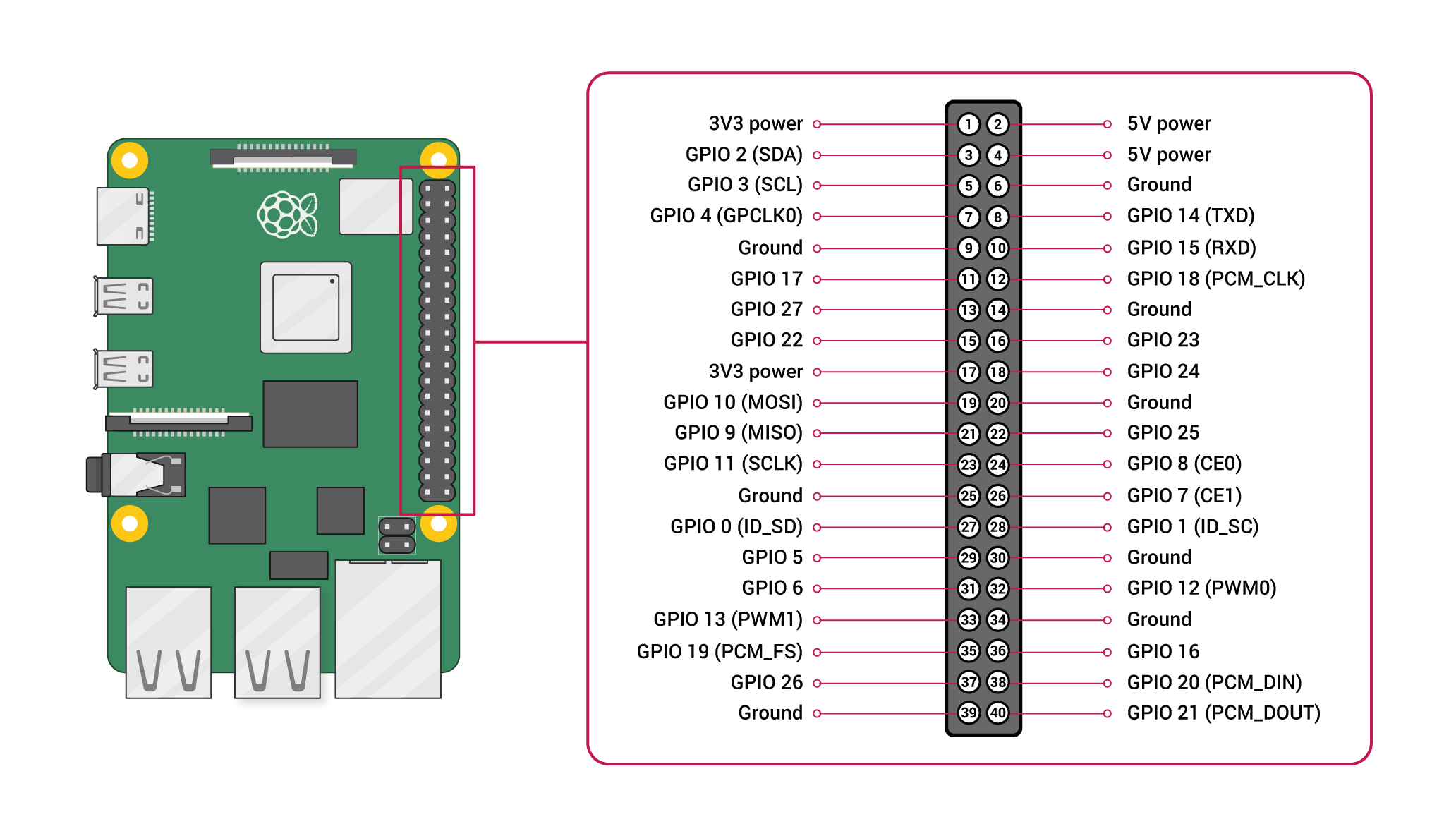
The software ecosystem for the Raspberry Pi 3 Model B+ is robust and versatile. At launch, it ran Raspbian Stretch, but it is fully compatible with modern versions of Raspberry Pi OS, Ubuntu, and other Linux distributions, supporting both 32-bit and 64-bit architectures. The boot process differs from newer Raspberry Pi models; the 3B+ does not use an SPI EEPROM for booting but relies on a bootcode.bin file located on the microSD card. However, it did introduce improved PXE network booting capabilities, allowing the board to boot from a network server without any local storage, which is useful for large-scale deployments. The General Purpose Input/Output, or GPIO, header remains the standard 40-pin interface, providing access to various communication protocols like I2C, SPI, and UART for connecting sensors, displays, and other peripherals. While the GPIO pins operate at 3.3 Volts and can supply up to 16 milliamps per pin, they do not include analog-to-digital converters, meaning external hardware is required for analog sensor readings. The board’s legacy support is extensive, with projects ranging from Pi-hole ad blockers to RetroPie gaming consoles and Home Assistant hubs leveraging its stable hardware. Although it lacks the latest Bluetooth 5.0 or Wi-Fi 6 standards, its proven reliability, extensive community support, and low cost make it a enduring choice for developers and hobbyists who require a capable, compact computer for a wide array of applications.
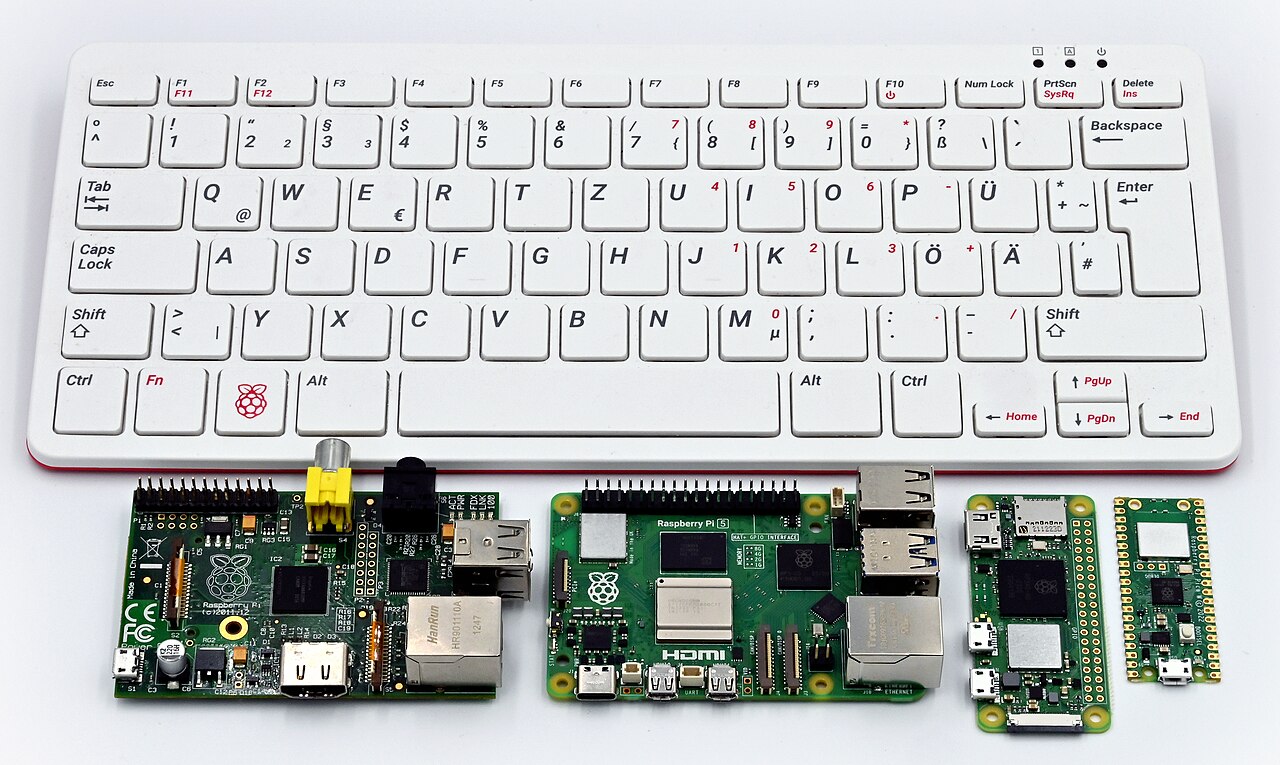
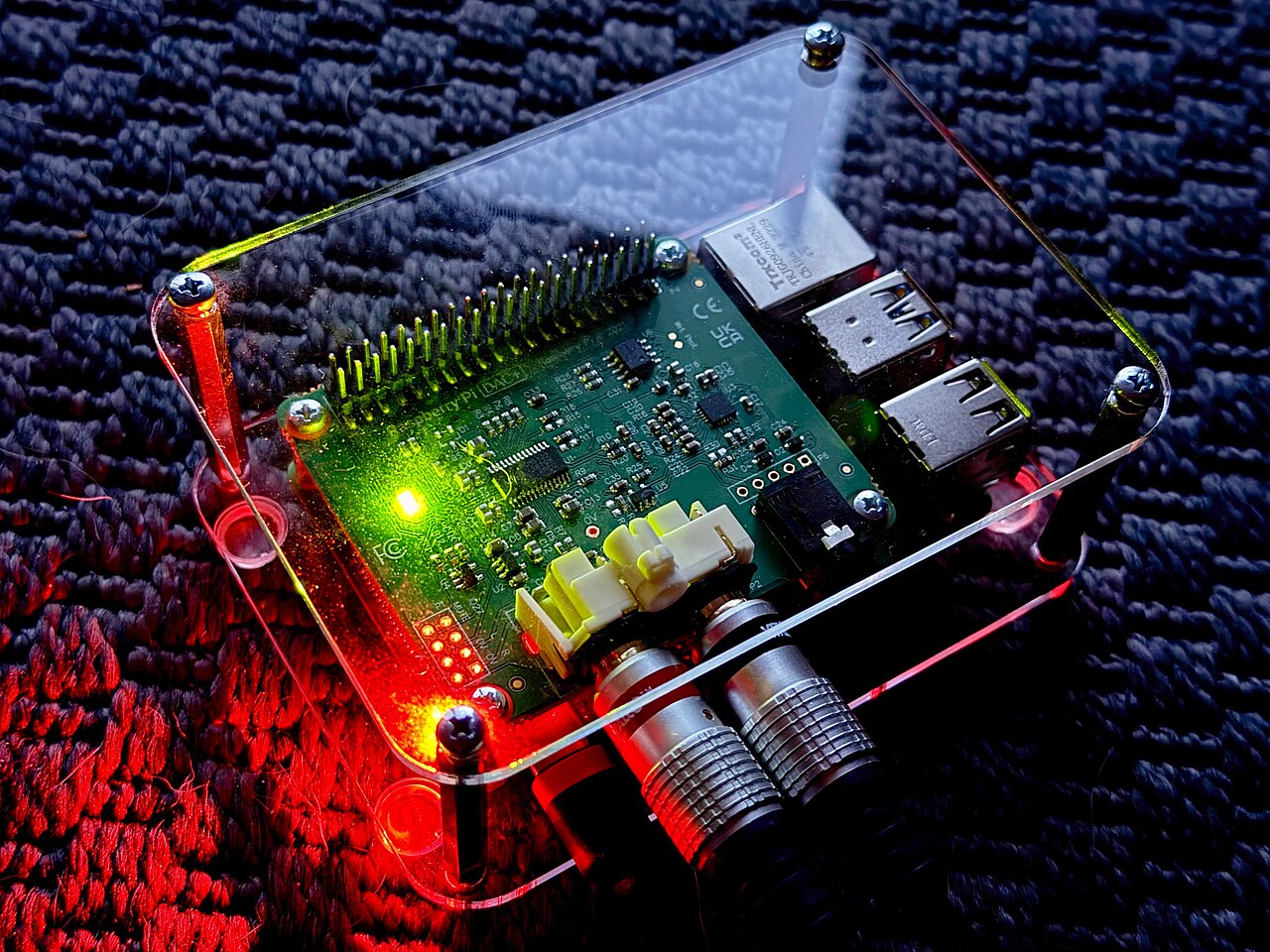
Pinout diagram
| Attr | Specs | verified |
|---|---|---|
soc | Broadcom BCM2837B0 — quad-core Cortex-A53 (ARMv8-A, 64-bit) @ 1.4 GHz (default arm_freq=1400, min 600 MHz), with power-integrity optimisations and an integrated heat spreader; "about 17% faster than the original Raspberry Pi 3". (BCM2837B0 official docs; config.txt overclocking defaults table) | ✔ |
gpu | VideoCore IV (32-bit), V3D/H.264/ISP blocks at 400 MHz (default v3d_freq=400); OpenGL ES 2.0, ~28.8 GFLOPS; 1080p30 H.264 encode/decode. (BCM2837B0 docs; overclocking defaults; Wikipedia) | ✔ |
ram | 1 GB LPDDR2 (shared CPU/GPU); SDRAM runs at 500 MHz default. (Official docs product table) | ✔ |
storage | microSD card slot (no eMMC option on the SBC). (Official docs) | ✔ |
ethernet | LAN7515 (Microchip) — Gigabit-class MAC+hub, but attached over the SoC's USB 2.0 bus, so real throughput caps at ~300 Mb/s: official iperf 315 Mb/s Tx/Rx vs ~95 on Pi 3B. Official table: "300 Mb/s Ethernet RJ45 with PoE support" (4-pin header, IEEE 802.3af-2003 via PoE HAT). (Launch post; docs product table; power-supplies docs) | ✔ |
wi_fi_bluetooth | Cypress CYW43455 combo chip — dual-band 2.4/5 GHz 802.11ac (official table: "100 Mb/s" class; launch-post iperf: 46.7 Mb/s @2.4 GHz, 102 Mb/s @5 GHz) + Bluetooth 4.2 / BLE; Proant PCB antenna; RF section under an embossed metal shield so the whole board is FCC-certified as a radio module. (Launch post; docs product table) | ✔ |
usb | 4 × USB 2.0 (behind the LAN7515 hub); max 1.2 A total peripheral draw. (Power-supplies docs) | ✔ |
gpio | standard 40-pin header (J8), 3.3 V logic (3.3 V/5 V rails, GND, ID EEPROM pins, I²C, SPI0/SPI1, UART0, I²S/PCM, hardware PWM; no ADC/DAC); pins 1–26 are the legacy 26-pin superset; each pin ≤16 mA, ≤50 mA total across the header. (pinout.xyz, retrieved 2026-10-13; Wikipedia; power-supplies docs) | ✔ |
a_v_misc | full-size HDMI, 3.5 mm 4-pole AV jack (composite + analog audio), CSI camera and DSI display ports. (Docs product table) | ✔ |
power | micro-USB, 5.1 V; official recommendation 2.5 A ("Raspberry Pi 3B+ does consume substantially more power than its predecessor. We strongly encourage you to use a high-quality 2.5A power supply"). Typical bare-board active current ≈500 mA (~2.5 W); low-voltage detection trips below 4.63 V ±5 %. (Launch post; power-supplies docs) | ✔ |
thermal | hard limit 85 °C (ARM progressively throttled 80–85 °C, ARM+GPU at 85 °C); 3B+ introduced a soft limit, default 60 °C (temp_soft_limit, max 70 °C) dropping 1.4 GHz → 1.2 GHz with a voltage reduction; PCB redesigned for heat dissipation/thermal mass. (Frequency-management docs; overclocking docs) | ✔ |
mechanical | standard Model B outline (65 × 56 mm class, 4 mounting holes). | ? unverified |
- Manufacturer / developer: Raspberry Pi (Trading) Ltd. / Raspberry Pi Foundation, with Broadcom silicon; board designed by Roger Thornton, built at the Sony UK Technology Centre, Pencoed, South Wales. (Official launch post, 14 Mar 2018)
- Launch: 14 March 2018 (Pi Day), at US$35 — same price as the Pi 3B it replaces: "Raspberry Pi 3 Model B+ is now on sale for $35 … featuring a 1.4GHz 64-bit quad-core processor, 3x faster Ethernet, faster wireless LAN, and more." (Official launch post; Wikipedia, retrieved 2026-10-13)
- Status: Active / in production as of 2026-10-13 — still listed in the current official product-line table, with no End-of-Life notice (the October 2025 EoL notices cover Pi 2B rev 1.1/1.2 and CM3/CM3L, not the 3B+). (Official docs "Introduction", retrieved 2026-10-13 via GitHub mirror)
- Variants: board revision 1.0 only (single schematic revision). Siblings sharing the BCM2837B0: 3A+ (Nov 2018, 512 MB, smaller A-form-factor), Compute Module 3+ (Jan 2019), and later Pi 2B (rev 1.3) / Pi 3B (rev 1.2) revisions. (Schematics page; BCM2837B0 docs)
+ Strengths
- First Pi with dual-band 802.11ac Wi-Fi and the fastest wireless of its generation (5 GHz band ~2× the 2.4 GHz result in official iperf). (Launch post)
- First Pi with a PoE header (4-pin, 802.3af) — clean single-cable industrial deployments with the official PoE HAT. (Launch post; power-supplies docs)
- Whole-board FCC radio certification thanks to the RF shield — cuts conformance-test cost for product makers. (Launch post)
- First thermal "sprint-then-marathon" scheme: soft 60 °C limit trading 1.4 GHz for sustained 1.2 GHz — the thermal mass treated "as a resource, to be spent carefully" (later adopted by Pi 4's PCB strategy). (Frequency-management docs; launch post)
- ~3× wired and wireless network throughput vs Pi 3B (LAN7515 315 Mb/s vs 94 Mb/s iperf). (Launch post)
- 64-bit capable (ARMv8) at the $35 price point; used by Collabora as the demo hardware for their early Vulkan driver Quake III run in 2020. (Wikipedia, retrieved 2026-10-13)
- PXE network boot enabled by default — fleet provisioning without touching an SD card. (Launch post)
− Weaknesses
- Power-hungry for its class: official warning that it "consumes substantially more power" than the 3B; weak micro-USB supplies cause the 4.63 V undervoltage detection, throttling, SD corruption. Use a real 2.5 A PSU. (Launch post; power-supplies docs)
- Throttling under sustained load: in a case or still air the 60 °C soft limit hits quickly (1.4→1.2 GHz), then 80–85 °C hard throttle; the launch-post 8-minute quad-core Sysbench graph shows the effect. Raising temp_soft_limit above 60 is capped at 70 and "might cause instability". (Frequency-management docs; overclocking docs)
- "Gigabit" Ethernet is USB 2.0-limited: ~300 Mb/s ceiling, shared with all four USB ports (one LAN7515 on one 480 Mbps bus). (Launch post; docs product table)
- 5 GHz regulatory lock: Linux wireless regulatory rules disable 5 GHz channels until the country is correctly set (e.g. country= in /etc/wpa_supplicant/wpa_supplicant.conf / Raspberry Pi Configuration); out-of-the-box 5 GHz AP mode often looks "missing" until then.
- 1 GB RAM ceiling — the hard constraint vs same-price newer boards; heavy browser/desktop or container workloads swap. (Docs product table)
- Old radios: Bluetooth 4.2 (no BT 5/LE-audio-era features) and Wi-Fi 5 (1×1 802.11ac) — fine in 2018, dated now. (Docs product table)
- PoE is 802.3af only (~13 W class, PoE HAT adds a small fan): power budget is tight with bus-powered USB peripherals attached; PoE+ (802.3at) needs Pi 4/Pi 5-class boards. (Power-supplies docs)
- Overclock warranty bit: force_turbo=1 plus any over_voltage_* permanently sets the overclock-detected bit in the SoC. (Overclocking docs)
- Metal cases kill the antenna: the Proant PCB antenna needs clearance; shielded/metal enclosures degrade both Wi-Fi bands (same antenna family as Zero W).
- Retour d'expérience expert expert — expert-raspberrypi
- Petit retour d'experience sur la 3B+. C'est toujours une carte solide a 35 dollars, surtout grace au Wi-Fi dual-band 802.11ac et au header PoE 802.3af qui facilitent grandement les deploiements en réseau sans prise secteur. Le passage au 64-bit est aussi appreciable. Par contre, attention a la cons… — expert-raspberrypi
- Merci pour ce rappel. Je galere justement pour activer le 5 GHz sur ma 3B+ fraichement installee. Malgre la connexion configurer, je ne vois aucune AP en 5 GHz. Est-ce que c'est lie a la configuration du pays ? J'ai lu quelque part qu'il fallait editer un fichier de configuration spécifique. Sinon,… — maker-debutant
- Ce n'est pas un bug, c'est une reglementation. Les pilotes Linux bloquent les canaux 5 GHz tant que le code pays n'est pas defini correctement pour respecter les normes locales. Il faut bien vérifier que le paramètre country est bien defini dans ton fichier wpa_supplicant ou via l'outil de configur… — linux-tinkerer
Community feedback and projects
- Raspberry Pi 3 B+ Ubuntu mate Install stackoverflow.com
- Raspberry Pi 3B+ Hackable Linux Handheld yarh.io
- The Raspberry Pi 3B+ as an SDR, Without the SDR hackaday.com
- Yarh.io Micro 2 Raspberry Pi 3B+ Hacker's Linux Handheld yarh.io
Content not available yet.
- raspberrypi.com/news/raspberry-pi-3-model-bplus-sale-now-35
- raspberrypi.org/documentation → hardware/raspberrypi/bcm2837b0
- RP-008339-DS
- RP-008337-DS
- RP-008336-DS
- RP-008160-DS
- pip.raspberrypi.com
- docs mirror
- docs mirror
- docs mirror
- docs mirror
- pinout.xyz
- forums.raspberrypi.com
- raspberrypi/documentation on GitHub
- Wikipedia: Raspberry Pi
- Power-hungry for its class: official warning that it "consumes substantially more power" than the 3B; weak micro-USB supplies cause the 4.63 V undervoltage detection, throttling, SD corruption. Use a real 2.5 A PSU. (Launch post; power-supplies docs)
- Throttling under sustained load: in a case or still air the 60 °C soft limit hits quickly (1.4→1.2 GHz), then 80–85 °C hard throttle; the launch-post 8-minute quad-core Sysbench graph shows the effect. Raising temp_soft_limit above 60 is capped at 70 and "might cause instability". (Frequency-management docs; overclocking docs)
- "Gigabit" Ethernet is USB 2.0-limited: ~300 Mb/s ceiling, shared with all four USB ports (one LAN7515 on one 480 Mbps bus). (Launch post; docs product table)
- 5 GHz regulatory lock: Linux wireless regulatory rules disable 5 GHz channels until the country is correctly set (e.g. country= in /etc/wpa_supplicant/wpa_supplicant.conf / Raspberry Pi Configuration); out-of-the-box 5 GHz AP mode often looks "missing" until then.
- 1 GB RAM ceiling — the hard constraint vs same-price newer boards; heavy browser/desktop or container workloads swap. (Docs product table)
- Old radios: Bluetooth 4.2 (no BT 5/LE-audio-era features) and Wi-Fi 5 (1×1 802.11ac) — fine in 2018, dated now. (Docs product table)
- PoE is 802.3af only (~13 W class, PoE HAT adds a small fan): power budget is tight with bus-powered USB peripherals attached; PoE+ (802.3at) needs Pi 4/Pi 5-class boards. (Power-supplies docs)
- Overclock warranty bit: force_turbo=1 plus any over_voltage_* permanently sets the overclock-detected bit in the SoC. (Overclocking docs)
- Metal cases kill the antenna: the Proant PCB antenna needs clearance; shielded/metal enclosures degrade both Wi-Fi bands (same antenna family as Zero W).
- Faire clignoter une LED avec libgpiod debutant Schéma : IMG-model-3b-plus-debutant-1-model3bp-led-gpio-libgpiod.svg — Carte à 40 broches, LED via résistance 330 Ω vers GPIO17 (broche 11) et GND (broche 14)
- Bouton poussoir et retour dans la console debutant Schéma : IMG-model-3b-plus-debutant-2-model3bp-bouton-console.svg — Bouton entre GPIO27 (broche 13) et GND (broche 9), résistance de pull-up interne, terminal affichant l'état
- Premier script Python : LED + bouton réunis debutant Schéma : IMG-model-3b-plus-debutant-3-model3bp-premier-script-python.svg — LED sur GPIO17 avec résistance et bouton sur GPIO27 reliés à la carte, éditeur de script à l'écran
- Variation d'intensité d'une LED en PWM intermediaire Schéma : IMG-model-3b-plus-intermediaire-1-model3bp-pwm-led.svg — LED sur GPIO18 (broche 12, PWM matériel) avec résistance, dégradé lumineux illustrant le rapport cyclique
- Lire un capteur I2C (température/humidité) intermediaire Schéma : IMG-model-3b-plus-intermediaire-2-model3bp-i2c-capteur.svg — Capteur I2C relié à SDA (broche 3) et SCL (broche 5), 3,3 V et GND, bus avec résistances de pull-up
- Connexion Wi-Fi 5 GHz et pilotage en SSH intermediaire Schéma : IMG-model-3b-plus-intermediaire-3-model3bp-wifi-station-ssh.svg — Carte et son antenne reliées en sans-fil à un box Internet, terminal distant en SSH, bande 5 GHz mise en avant
- Boot sur SD ou USB et procédure de recouvrement avance Schéma : IMG-model-3b-plus-avance-1-model3bp-boot-sd-usb-recouvrement.svg — Carte avec fente microSD et clé USB branchée, flèches de priorité de démarrage et fichier bootcode.bin en évidence
- Surveillance thermique et bridage : le sprint-marathon avance Schéma : IMG-model-3b-plus-avance-2-model3bp-surveillance-thermique.svg — Carte avec dissipateur, sonde de température et graphique fréquence CPU passant de 1400 à 1200 MHz au seuil de 60 °C
- NAS léger : disque USB et partage Samba avance Schéma : IMG-model-3b-plus-avance-3-model3bp-nas-leger-samba.svg — Carte reliée par un hub USB à un disque dur externe alimenté, partages réseau Samba vers les postes du foyer
Code library — examples written for this board
led_blink.pyPythonbutton_led.pyPythonservo_sweep.pyPythondht_temp.pyPythonoled_i2c.pyPythonmcp3008_read.pyPythoncam_photo.pyPythonweb_led.pyPythongpiotools_blink.shBashblink_c.cC
Examples and repos found online
- raspberrypi/noobs github.com
- joan2937/pigpio github.com
- raspberrypi/linux github.com
- retropie/retropie-setup github.com