BIOSSTAR BIWCL-PAT: 3.5" Industrial SBC with Intel Wildcat Lake
⚡ The essentials in 60 seconds
- soc — Intel Core Series 3 "Wildcat Lake" (Core 3 304 à Core 7 360)
- ram — Jusqu'à 64GB DDR5-6400 via slot SO-DIMM
- storage — M.2 M-Key 2242/2280 (PCIe 4.0 x2) pour NVMe SSD
- wifi_bluetooth — Optionnel via module M.2 E-Key
- ethernet — Double port 2.5GbE RJ45 (Intel i226-LM et i226-V)
- video — Triple affichage indépendant : HDMI 2.1 (4K), DP 1.4 (4K), LVDS (1920x1200)
- On this board : 7 tutorials · 9 code
In the landscape of embedded computing, where space is often at a premium and reliability is non-negotiable, the BIOSTAR BIWCL-PAT emerges as a compelling solution for engineers and developers seeking high performance within a compact footprint. This single-board computer adheres to the 3.5-inch form factor, measuring just 148 by 102 millimeters with a slim profile of 1.6 millimeters. This specific size class is significant in industrial design because it strikes a balance between the ultra-compact nature of credit-card-sized boards and the expandability of larger micro-ATX systems. By fitting into this standard chassis size, the BIWCL-PAT allows for easier integration into existing enclosures, kiosks, and control cabinets, reducing the need for custom mechanical engineering. At the heart of this board lies the Intel Core Series 3 "Wildcat Lake" System on Chip. This family of processors covers a range from the Core 3 304 up to the Core 7 360, all operating within a modest Thermal Design Power of 15 watts. For those unfamiliar with the term, Thermal Design Power, or TDP, represents the maximum amount of heat generated by the computer chip that the cooling system is designed to dissipate under typical workloads. A 15-watt TDP is notably low for a processor of this class, indicating that the BIWCL-PAT is engineered for energy efficiency and passive cooling potential, which is crucial for industrial environments where fans can fail due to dust accumulation or vibration.
Memory and storage configurations on the BIWCL-PAT reflect a modern approach to embedded systems, moving away from soldered components toward modular, upgradable solutions. The board features a SO-DIMM slot that supports DDR5-6400 memory, allowing users to install up to 64 gigabytes of RAM. DDR5 is the current generation of double data rate synchronous dynamic random-access memory, offering higher bandwidth and improved power efficiency compared to its predecessor, DDR4. The ability to upgrade RAM via a standard SO-DIMM slot is a significant advantage, as it allows system integrators to tailor the memory capacity to the specific demands of their application without replacing the entire board. Storage is handled through an M.2 M-Key slot, which supports NVMe solid-state drives using the PCIe 4.0 interface. NVMe, or Non-Volatile Memory Express, is a protocol designed specifically for flash storage, providing significantly faster data transfer speeds than traditional SATA interfaces. The support for PCIe 4.0 x2 lanes ensures that the board can handle rapid read and write operations, which is essential for applications involving large datasets or real-time logging.
Connectivity is a standout feature of the BIWCL-PAT, particularly regarding its network capabilities. The board includes dual 2.5 Gigabit Ethernet ports, driven by Intel i226-LM and i226-V controllers. The distinction between these controllers is subtle but important: the LM variant is typically optimized for low-latency applications, while the V variant may offer different power management features. Having two independent network ports allows for network segmentation, such as separating control traffic from data traffic, or for redundancy in critical industrial systems. For wireless connectivity, the board provides optional support via M.2 slots. An E-Key slot is available for Wi-Fi and Bluetooth modules, enabling wireless communication for mobile or hard-to-wire installations. Additionally, a B-Key slot with a Nano SIM holder supports 4G or 5G cellular modules, providing wide-area network connectivity for remote edge computing deployments where wired infrastructure is unavailable. This combination of wired and wireless options ensures that the BIWCL-PAT can be deployed in a wide variety of network environments.
Display capabilities are robust, supporting triple independent displays. The board outputs video through HDMI 2.1, DisplayPort 1.4, and LVDS interfaces. HDMI 2.1 and DisplayPort 1.4 both support 4K resolution, making the board suitable for high-resolution digital signage or interactive kiosks. The inclusion of an LVDS interface, which supports up to 1920x1200 resolution, is particularly relevant for industrial applications. LVDS, or Low-Voltage Differential Signaling, is a standard interface used to connect LCD panels directly to the motherboard, often found in embedded displays where HDMI connectors might be too bulky or unreliable for long-term use in harsh environments. The ability to drive three independent screens simultaneously allows for complex user interfaces, such as a main display for the user, a secondary display for administrative controls, and a third for status monitoring.
Peripheral connectivity is designed with industrial automation in mind. The board offers two USB 3.2 Gen 2 Type-A ports, which provide high-speed data transfer for peripherals like external storage or cameras, and two USB 2.0 Type-A ports for slower devices like keyboards or mice. Additionally, there are two internal USB 2.0 headers for connecting internal modules. Perhaps most importantly for industrial control, the BIWCL-PAT includes four serial ports. Two of these are standard RS232 ports, while the other two support RS232, RS422, and RS485 standards. Serial communication remains the backbone of many industrial protocols, such as Modbus, due to its simplicity and robustness over long distances. The inclusion of RS422 and RS485 support allows for multi-drop networks where multiple devices can communicate over the same pair of wires, a common requirement in factory automation. An 8-bit Digital Input/Output header, selectable between 3.3V and 5V logic levels, provides basic GPIO capabilities for interfacing with sensors and actuators.
Power delivery is flexible, accepting 9 to 24 volts DC via a Phoenix connector or a 4-pin header. This wide voltage range is typical for industrial equipment, which often runs on 12V or 24V DC power supplies found in control cabinets. The use of a Phoenix connector, a type of screw-terminal block, ensures a secure connection that is less likely to vibrate loose compared to a standard barrel jack. Security is addressed with an embedded TPM 2.0 module, which provides hardware-based encryption keys and secure boot capabilities, essential for protecting intellectual property and ensuring data integrity in IoT deployments. The board is compatible with Windows 11 IoT Enterprise and Ubuntu 24.04, offering developers a choice between a proprietary, long-term support operating system and a widely used open-source Linux distribution. While the price is not publicly disclosed, the BIWCL-PAT positions itself as a versatile tool for edge computing, industrial automation, and interactive terminals, leveraging modern Intel architecture within a proven, compact form factor.
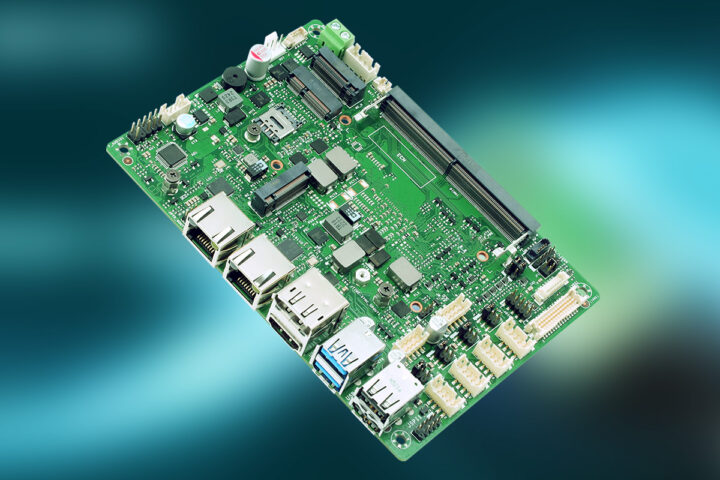
| Attr | Specs | verified |
|---|---|---|
soc | Intel Core Series 3 "Wildcat Lake" (Core 3 304 à Core 7 360) | ? unverified |
ram | Jusqu'à 64GB DDR5-6400 via slot SO-DIMM | ? unverified |
storage | M.2 M-Key 2242/2280 (PCIe 4.0 x2) pour NVMe SSD | ? unverified |
wifi_bluetooth | Optionnel via module M.2 E-Key | ? unverified |
ethernet | Double port 2.5GbE RJ45 (Intel i226-LM et i226-V) | ? unverified |
video | Triple affichage indépendant : HDMI 2.1 (4K), DP 1.4 (4K), LVDS (1920x1200) | ? unverified |
usb | 2x USB 3.2 Gen 2 Type-A, 2x USB 2.0 Type-A, 2x USB 2.0 internes | ? unverified |
gpio | Header DIO 8 bits (3.3V/5V sélectionnable) | ? unverified |
power | 9V à 24V DC via bloc Phoenix 2 broches ou header 4 broches | ? unverified |
os | Windows 11 IoT Enterprise 24H2+, Ubuntu 24.04 | ? unverified |
dimensions | 148 x 102 x 1.6 mm (format 3.5 pouces) | ? unverified |
serial | 4 interfaces série (2x RS232, 2x RS232/422/485) | ? unverified |
expansion | 3 slots M.2 (M-Key, B-Key avec SIM, E-Key) | ? unverified |
security | TPM 2.0 embarqué | ? unverified |
The BIOSTAR BIWCL-PAT is a 3.5-inch industrial single-board computer built around the Intel Core Series 3 "Wildcat Lake" SoC family. It targets industrial automation, edge computing, and interactive kiosk applications requiring robust network connectivity and multi-display management.
+ Strengths
- Triple independent display support (HDMI 2.1, DP 1.4, LVDS) and dual 2.5GbE Ethernet ports for robust connectivity.
- Scalable memory up to 64GB via DDR5-6400 and fast NVMe PCIe 4.0 storage.
- Extensive industrial connectivity with 4 configurable serial ports, DIO header, and optional 4G/5G wireless options.
− Weaknesses
- The price of the board is not publicly disclosed by the manufacturer.
- Wi-Fi/Bluetooth and cellular connectivity are optional, requiring specific M.2 modules.
- Computing power is limited by a 15W TDP, restricting intensive workloads.
- Retour d'expérience expert expert — expert-microdb
- Après 3 mois sur un projet d'automate, je valide la BIWCL-PAT. Le format 3,5" est parfait pour les boîtiers DIN. Les 4 ports série RS422/485 évitent les convertisseurs USB fragiles. Attention : le TDP de 15W impose une bonne dissipation passive ou active, sinon throttling sous charge. La RAM DDR5 6… — expert-microdb
- @Expert : Merci pour le retour. J'ai testé l'affichage triple écran (HDMI+DP+LVDS) sur un kiosk interactif. Ça tourne sous Windows 11 IoT. Le souci vient de l'alim 9-24V : si tu descends à 9V, le pic de démarrage du SoC Wildcat Lake fait rebooter la carte. Prévois une alim de qualité à 12V ou 24V. … — membre-forum
Community feedback and projects
- Discussions Reddit — BIWCL-PAT reddit.com
- Articles CNX Software — BIWCL-PAT cnx-software.com
Content not available yet.
Content not available yet.
Content not available yet.
- Not specified.
- BIWCL-PAT: First connections and boot-up debutant Guide pas à pas pour installer la mémoire, le stockage et démarrer votre carte industrielle BIWCL-PAT en toute sécurité.
- Mastering I/O on the BIWCL-PAT debutant Apprenez à utiliser le header DIO 8 bits et les ports série pour interagir avec des périphériques simples.
- Configuring Digital I/O (DIO) on the BIWCL-PAT intermediaire Apprenez à piloter le header DIO 8 bits de la carte BIWCL-PAT pour interagir avec des capteurs ou actionneurs industriels.
- Advanced Setup: BIOS, NVMe, and Triple Display on BIWCL-PAT avance Guide technique pour le démarrage initial, la configuration du BIOS et la validation des interfaces critiques.
- Mastering Advanced I/O on BIWCL-PAT: GPIO, Sensors and Display avance Configurez les entrées-sorties numériques, les ports série et l'affichage multi-écrans de la carte industrielle BIOSTAR BIWCL-PAT pour des applications IoT critiques.
- Deploying an Industrial Automation Station on BIWCL-PAT avance Configurez la carte BIWCL-PAT pour un contrôle industriel temps réel utilisant les ports série et le stockage NVMe.
- Configure the three video outputs on BIWCL-PAT debutant Apprenez à activer et configurer simultanément HDMI, DisplayPort et LVDS pour le multi-affichage industriel.
Code library — examples written for this board
multi-display-triple-screen-1.inobashhigh-speed-eth-pdu-2.inopythonserial-industrial-modbus-3.inopythonnvme-sysbench-storage-perf-4.inobashgpiod-dio-industrial-switch-5.inocintel-ax-wifi-scan-connect-6.inopythonlvds-embedded-hmi-qt5-7.inoC++ (Qt5)usb32-camera-stream-opencv-8.inoPythoni2c-smbus-temp-monitor-9.inoPython